8-K
false000177611100017761112026-06-122026-06-12
UNITED STATES
SECURITIES AND EXCHANGE COMMISSION
WASHINGTON, D.C. 20549
FORM 8-K
CURRENT REPORT
Pursuant to Section 13 or 15(d) of the Securities Exchange Act of 1934
|
Date of Report (Date of earliest event reported): June 12, 2026 |
MBX Biosciences, Inc.
(Exact name of Registrant as Specified in Its Charter)
|
|
|
|
|
Delaware |
001-42272 |
84-1882872 |
(State or Other Jurisdiction
of Incorporation) |
(Commission File Number) |
(IRS Employer
Identification No.) |
|
|
|
|
|
11711 N. Meridian Street Suite 300 |
|
Carmel, Indiana |
|
46032 |
(Address of Principal Executive Offices) |
|
(Zip Code) |
|
Registrant’s Telephone Number, Including Area Code: (317) 659-0200 |
(Former Name or Former Address, if Changed Since Last Report)
Check the appropriate box below if the Form 8-K filing is intended to simultaneously satisfy the filing obligation of the registrant under any of the following provisions:
☐Written communications pursuant to Rule 425 under the Securities Act (17 CFR 230.425)
☐Soliciting material pursuant to Rule 14a-12 under the Exchange Act (17 CFR 240.14a-12)
☐Pre-commencement communications pursuant to Rule 14d-2(b) under the Exchange Act (17 CFR 240.14d-2(b))
☐Pre-commencement communications pursuant to Rule 13e-4(c) under the Exchange Act (17 CFR 240.13e-4(c))
Securities registered pursuant to Section 12(b) of the Act:
|
|
|
|
|
Title of each class
|
|
Trading
Symbol(s) |
|
Name of each exchange on which registered
|
Common Stock, $0.0001 par value per share |
|
MBX |
|
Nasdaq Global Select Market |
Indicate by check mark whether the registrant is an emerging growth company as defined in Rule 405 of the Securities Act of 1933 (§ 230.405 of this chapter) or Rule 12b-2 of the Securities Exchange Act of 1934 (§ 240.12b-2 of this chapter).
Emerging growth company ☒
If an emerging growth company, indicate by check mark if the registrant has elected not to use the extended transition period for complying with any new or revised financial accounting standards provided pursuant to Section 13(a) of the Exchange Act. ☐
Item 7.01 Regulation FD Disclosure.
On June 12, 2026, MBX Biosciences, Inc. (the "Company") issued a press release (the "Press Release") titled “MBX Biosciences Announces One-Year Data Demonstrating Sustained Benefit of Once-Weekly Canvuparatide as a Potential PTH Replacement Therapy in Chronic Hypoparathyroidism.” A copy of the Press Release is being furnished as Exhibit 99.1 to this Current Report on Form 8-K.
Also, on June 12, 2026 at 8:00 a.m. E.T., the Company will host a conference call and webcast to discuss the one-year data from the Phase 2 Avail™ and open-label extension ("OLE") clinical trials of canvuparatide in adult patients with chronic hypoparathyroidism ("HP"). A copy of the presentation from the event will be available in the "Investors" section of the Company's website at www.mbxbio.com and is furnished as Exhibit 99.2 to this Current Report on Form 8-K.
The information included under Item 7.01 of this Current Report on Form 8-K, including Exhibits 99.1 and 99.2 attached hereto, is intended to be furnished and shall not be deemed "filed" for purposes of Section 18 of the Securities Exchange Act of 1934, as amended (the "Exchange Act"), or otherwise subject to the liabilities of that section, and shall not be deemed incorporated by reference in any filing under the Securities Act of 1933, as amended, or the Exchange Act, except as expressly set forth by specific reference in such filing.
Item 8.01 Other Events.
On June 12, 2026, the Company announced one-year data from the Phase 2 Avail™ and OLE clinical trials of canvuparatide in adult patients with chronic HP. The update is summarized below.
Key Findings from the 12-Week Avail™ Phase 2 Trial and One-Year OLE
Responder Rate
•At 12 Weeks: As previously reported, 63% of canvuparatide-treated patients (30/48) achieved the primary composite endpoint compared with 31% of placebo-treated patients (5/16) (p=0.042). The primary endpoint was defined as maintaining albumin-adjusted serum calcium levels in the normal range and independence from conventional therapy (active vitamin D and >600 mg/day of calcium supplements).
•At One Year: 57% of evaluable patients (31/54) achieved responder status; zero contribution from rescue therapy (PRN) in the last week of the one-year treatment period.
Pharmacokinetic Profile
•Pharmacokinetics ("PK"): PK data from the Phase 2 trial continued to support the potential for once-weekly dosing. PK demonstrated consistent concentration of canvuparatide active drug with a Tmax of 2-3 days, minimal fluctuation and a peak‑to‑trough ratio of approximately 1.3 over a week, ensuring consistent systemic drug exposure over the entire weekly dosing interval.
Evidence of Physiologic PTH Replacement
•Calcium Homeostasis: Mean serum calcium levels were maintained within the normal range through one year of treatment, while mean 24-hour urine calcium levels decreased from baseline and remained within the normal range, with continued reductions observed over time in both canvuparatide-treated patients and those who switched from placebo.
•Kidney Function: Mean estimated glomerular filtration rate ("eGFR") increased from baseline at Week 12 in canvuparatide-treated patients and remained improved through one year of treatment.
•Bone Activity: Markers of bone resorption (C-terminal peptide; CTx) and formation (procollagen type 1 N-terminal propeptide; P1NP) demonstrated the expected pattern of bone turnover associated with PTH replacement therapy through one year. Changes in bone mineral density (BMD) T-scores and Z-scores were consistent with restoration of physiologic bone remodeling.
One-Year OLE Safety Summary
•Once-weekly canvuparatide was generally well tolerated through one year of treatment, with no new safety signals observed during the OLE.
•Most treatment emergent adverse events were mild or moderate in severity.
•No treatment-related serious adverse events were reported.
•Injection site reactions were reported in 10% of patients in the OLE.
Exploratory Assessments
•Patient-Reported Outcomes: Trends toward improvement were observed across multiple SF-36v2 domains; however, interpretation was limited by incomplete baseline data.
Forward-Looking Statements
This Current Report on Form 8-K contains “forward-looking statements” within the meaning of Section 27A of the Securities Act of 1933 and Section 21E of the Securities Exchange Act of 1934, each as amended. The words “anticipate,” “believe,” “continue,” “could,” “estimate,” “expect,” “intend,” “may,” “plan,” “potential,” “predict,” “project,” “should,” “target,” "will," “would” and similar expressions are intended to identify forward-looking statements, although not all forward-looking statements contain these identifying words. These forward-looking statements include, but are not limited to, express or implied statements regarding: the potential for canvuparatide to be a once-weekly PTH replacement therapy; the potential for canvuparatide to become a best-in-class treatment option for chronic HP; expectations regarding future clinical evaluation of canvuparatide, including timing of the Phase 3 confirmatory trial; and statements relating to canvuparatide having a favorable safety profile.
Forward-looking statements are based on management’s current expectations and are subject to risks and uncertainties that could negatively affect MBX Biosciences’ business, operating results, financial condition and stock value. Factors that could cause actual results to differ materially from those currently anticipated include: risks relating to the Company’s research and development activities; MBX Biosciences’ ability to execute on its strategy including obtaining the requisite regulatory approvals on the expected timeline, if at all; uncertainties relating to preclinical and clinical development activities, including the risk for differences between interim data and final data from the Company’s ongoing clinical trials; the Company’s dependence on third parties to conduct clinical trials, manufacture its product candidates and develop and commercialize its product candidates, if approved; MBX Biosciences’ ability to attract, integrate and retain key personnel; risks related to the Company’s financial condition and need for substantial additional funds in order to complete development activities and commercialize a product candidate, if approved; risks related to regulatory developments and approval processes of the U.S. Food and Drug Administration and comparable foreign regulatory authorities; risks related to establishing and maintaining MBX Biosciences’ intellectual property protections; and risks related to the competitive landscape for MBX Biosciences’ product candidates; as well as other risks described in “Risk Factors,” in MBX Biosciences’ Annual Report on Form 10-K for the year ended December 31, 2025, Quarterly Report on Form 10-Q for the three months ended March 31, 2026, as well as subsequent filings filed with the Securities and Exchange Commission (SEC), including the matters described in this Current Report on Form 8-K. MBX Biosciences expressly disclaims any obligation or undertaking to release publicly any updates or revisions to any forward-looking statements contained herein to reflect any change in its expectations or any changes in events, conditions or circumstances on which any such statement is based, except as required by law, and claims the protection of the safe harbor for forward-looking statements contained in the Private Securities Litigation Reform Act of 1995.
Item 9.01 Financial Statements and Exhibits.
(d) Exhibits.
SIGNATURES
Pursuant to the requirements of the Securities Exchange Act of 1934, the registrant has duly caused this report to be signed on its behalf by the undersigned hereunto duly authorized.
|
|
|
|
|
|
|
MBX BIOSCIENCES, INC. |
|
|
|
|
Date: |
June 12, 2026 |
By: |
/s/ P. Kent Hawryluk |
|
|
|
President and Chief Executive Officer (Principal Executive Officer) |
EX-99.1

MBX Biosciences Announces One-Year Data Demonstrating Sustained Benefit of Once-Weekly Canvuparatide as a Potential PTH Replacement Therapy in Chronic Hypoparathyroidism
Responder rate of 57% at one year in open-label extension (OLE) comparable to 63% at 12 weeks in Phase 2 Avail™ trial
Results consistent with restoration of systemic PTH activity through serum calcium normalization, reduction of urine calcium excretion, restoration of bone metabolism and increase of eGFR (a measure of kidney function)
High retention rate with 90% of patients entering the OLE remaining in the study at one year
Canvuparatide was generally well tolerated with no new safety signals during the OLE
PK supports once-weekly dosing, with low peak-to-trough ratio and stable exposure
Phase 3 pivotal trial remains on track to initiate in Q3 2026
Company to host conference call today at 8:00 a.m. ET
CARMEL, Ind. and BURLINGTON, Mass., June 12, 2026 (GLOBE NEWSWIRE) – MBX Biosciences, Inc. (Nasdaq: MBX), a clinical-stage biopharmaceutical company focused on the discovery, development and commercialization of novel precision peptide therapies for the treatment of endocrine and metabolic disorders, today announced full results from the 12-week Avail™ Phase 2 trial and new one-year data from the ongoing open-label extension (OLE) study of once-weekly canvuparatide in adult patients with chronic hypoparathyroidism.
“These results continue to support the potential of once-weekly canvuparatide to address important unmet needs for patients with hypoparathyroidism,” said Michael T. Collins, M.D.
Endocrinologist, Special Volunteer and Senior Clinical Advisor at the National Institutes of Health. “The maintenance of calcium homeostasis, increased eGFR, decreased urine calcium and bone remodeling observed through one year are encouraging and consistent with the physiologic effects of restored PTH action. A therapy that can provide sustained control of multiple disease markers with once-weekly administration could represent a meaningful advance for patients and supports moving into Phase 3 study for canvuparatide.”
“The full Phase 2 and one-year OLE results underscore the potential for once-weekly canvuparatide to become a best-in-class treatment option for patients with chronic hypoparathyroidism,” said Kent Hawryluk, President and Chief Executive Officer of MBX Biosciences. “The totality of the clinical data we announced today – including the impact of canvuparatide on calcium, kidney function and bone – support a convenient once-weekly approach to physiologic PTH replacement, which may reduce the treatment burden for patients
living with this chronic disease. We remain on track to begin the Phase 3 trial in Q3 2026 and we are excited to be one step closer to delivering a new potential treatment option for patients with hypoparathyroidism.”
Key Findings from the 12-Week Avail™ Phase 2 Trial and One-Year OLE
Responder Rate
•At 12 Weeks: As previously reported, 63% of canvuparatide-treated patients (30/48) achieved the primary composite endpoint compared with 31% of placebo-treated patients (5/16) (p=0.042). The primary endpoint was defined as maintaining albumin-adjusted serum calcium levels in the normal range and independence from conventional therapy (active vitamin D and >600 mg/day of calcium supplements).
•At One Year: 57% of evaluable patients (31/54) achieved responder status; zero contribution from rescue therapy (PRN) in the last week of the one-year treatment period.
Pharmacokinetic Profile
•Pharmacokinetics (PK): PK data from the Phase 2 trial continued to support the potential for once-weekly dosing. PK demonstrated consistent concentration of canvuparatide active drug with a Tmax of 2-3 days, minimal fluctuation and a peak‑to‑trough ratio of approximately 1.3 over a week, ensuring consistent systemic drug exposure over the entire weekly dosing interval.
Evidence of Physiologic PTH Replacement
•Calcium Homeostasis: Mean serum calcium levels were maintained within the normal range through one year of treatment, while mean 24-hour urine calcium levels decreased from baseline and remained within the normal range, with continued reductions observed over time in both canvuparatide-treated patients and those who switched from placebo.
•Kidney Function: Mean estimated glomerular filtration rate (eGFR) increased from baseline at Week 12 in canvuparatide-treated patients and remained improved through one year of treatment.
•Bone Activity: Markers of bone resorption (C-terminal peptide; CTx) and formation (procollagen type 1 N-terminal propeptide; P1NP) demonstrated the expected pattern of bone turnover associated with PTH replacement therapy through one year. Changes in bone mineral density (BMD) T-scores and Z-scores were consistent with restoration of physiologic bone remodeling.
One-Year OLE Safety Summary
•Once-weekly canvuparatide was generally well tolerated through one year of treatment, with no new safety signals observed during the OLE.
•Most treatment emergent adverse events were mild or moderate in severity.
•No treatment-related serious adverse events were reported.
•Injection site reactions were reported in 10% of patients in the OLE.
Exploratory Assessments
•Patient-Reported Outcomes: Trends toward improvement were observed across multiple SF-36v2 domains; however, interpretation was limited by incomplete baseline data.
Upcoming Presentations
One-year OLE data from the Phase 2 trial will be presented at the 3rd Parathyroid Summit during ENDO 2026 on June 12, 2026, and full results from the 12-week Avail™ Phase 2 trial will be presented at ENDO 2026 at 3:00 pm CT on June 13, 2026, in Chicago. These presentations will be available on MBX’s website at https://investors.mbxbio.com/news-events/presentations following each presentation.
Conference Call Details
The Company will host a conference call and webcast today at 8:00 a.m. ET to discuss full results from the 12-week Avail™ Phase 2 trial and one-year OLE data for once-weekly canvuparatide. Company management will be joined by Richard DiMarchi, Ph.D., Distinguished Professor of Chemistry at Indiana University and MBX scientific co-founder, and Michael T. Collins, M.D., endocrinologist and Senior Clinical Advisor at the National Institutes of Health. Those who would like to participate may access the live webcast here or dial 1-877-407-0779 (US) or 1-201-389-0914 (international). The live and archived webcast of the call and slide presentation will be available in the Investors section of the Company’s website at https://investors.mbxbio.com/news-events/events.
About the Avail™ Trial
The Avail™ Phase 2 trial (NCT06465108) is a multicenter, randomized, double-blind, placebo-controlled study to evaluate the safety, pharmacokinetics, and efficacy of canvuparatide in patients with hypoparathyroidism. The study randomized 64 patients into four treatment arms: canvuparatide 400ug, 600ug, 800ug administered by subcutaneous once-weekly injection, and a placebo arm. The 12-week treatment period includes a four-week fixed dose period followed by an 8-week titration period during which canvuparatide dosing may be adjusted every two weeks in 200ug increments. The primary endpoint for efficacy is normalization of albumin adjusted serum calcium while independent from active vitamin D and calcium supplements (<600 mg/day) at Week 12. Secondary endpoints include safety and tolerability; pharmacokinetic profile; urine calcium, serum phosphorus, 1,25 dihydroxyvitamin D, and bone biomarkers. Following the 12-week treatment period, 60 patients (94%) elected to receive once-weekly canvuparatide in the two-year open-label extension study with 90% of patients who entered the OLE continuing treatment in the ongoing study.
About Hypoparathyroidism (HP)
HP is a rare endocrine disease caused by a deficiency of parathyroid hormone (PTH) released by the parathyroid glands that results in decreased calcium levels in the blood, leading to hypocalcemia. Hypocalcemia can cause a variety of symptoms, such as muscle cramping or spasm, tingling, and neurological symptoms such as depression, confusion, and cognitive impairment. More serious complications can occur, including seizures and cardiac arrhythmia. HP can interfere with daily activities, negatively impacting the quality of life for patients. We estimate that HP affects more than 250,000 individuals in the U.S. and Europe. The current standard of care for HP does not address the underlying cause of the disease, PTH deficiency, and consists primarily of high doses of oral calcium and active vitamin D supplements.
About Canvuparatide
Canvuparatide is a parathyroid hormone peptide prodrug that is designed as a potential long-acting hormone replacement therapy for the treatment of HP. Leveraging the company’s proprietary Precision Endocrine Peptide™ (PEP™) platform technology, canvuparatide was designed to provide convenient, once-weekly administration and a continuous, infusion-like PTH exposure with lower daily peak-to-trough ratios than observed with daily PTH dosing regimens. Canvuparatide received orphan drug designation from the U.S. Food and Drug Administration for the treatment of HP.
About MBX Biosciences
MBX Biosciences is a biopharmaceutical company focused on the discovery, development and commercialization of novel precision peptide therapies based on its proprietary PEP™ platform, for the treatment of endocrine and metabolic disorders. The Company is advancing a pipeline of novel candidates for endocrine and metabolic disorders with clinically validated targets, established endpoints for regulatory approval, significant unmet medical needs and large potential market opportunities. The Company’s pipeline includes canvuparatide (MBX 2109) for the treatment of chronic hypoparathyroidism preparing for Phase 3 development; and an obesity portfolio that includes MBX 4291 in Phase 1 development and MBX 5765 in preclinical development, as well as additional discovery candidates. The Company is based in Carmel, Indiana and Burlington, Massachusetts. To learn more, please visit the company website at www.mbxbio.com and follow it on LinkedIn.
Forward-Looking Statements
This press release contains “forward-looking statements” within the meaning of Section 27A of the Securities Act of 1933 and Section 21E of the Securities Exchange Act of 1934, each as amended. The words “anticipate,” “believe,” “continue,” “could,” “estimate,” “expect,” “intend,” “may,” “plan,” “potential,” “predict,” “project,” “should,” “target,” “will,” “would” and similar expressions are intended to identify forward-looking statements, although not all forward-looking statements contain these identifying words. These forward-looking statements include, but are not limited to, express or implied statements regarding: the potential for canvuparatide to be a once-weekly PTH replacement therapy; the potential for canvuparatide to become a best-in-class treatment option for chronic HP; expectations regarding future clinical evaluation of canvuparatide, including timing of the Phase 3 confirmatory trial; and statements relating to canvuparatide having a favorable safety profile.
Forward-looking statements are based on management’s current expectations and are subject to risks and uncertainties that could negatively affect MBX Biosciences’ business, operating results, financial condition and stock value. Factors that could cause actual results to differ materially from those currently anticipated include: risks relating to the Company’s research and development activities; MBX Biosciences’ ability to execute on its strategy including obtaining the requisite regulatory approvals on the expected timeline, if at all; uncertainties relating to preclinical and clinical development activities, including the risk for differences between interim data and final data from the Company’s ongoing clinical trials; the Company’s dependence on third parties to conduct clinical trials, manufacture its product candidates and develop and commercialize its product candidates, if approved; MBX Biosciences’ ability to attract, integrate and retain key personnel; risks related to the Company’s financial condition and need for substantial additional funds in order to complete development activities and commercialize a product candidate, if approved; risks related to regulatory developments and approval processes of the U.S. Food and Drug Administration and comparable foreign regulatory authorities; risks related to establishing and maintaining MBX Biosciences’ intellectual property
protections; and risks related to the competitive landscape for MBX Biosciences’ product candidates; as well as other risks described in “Risk Factors,” in MBX Biosciences’ Annual Report on Form 10-K for the year ended December 31, 2025, Quarterly Report on Form 10-Q for the three months ended March 31, 2026, as well as subsequent filings filed with the Securities and Exchange Commission (SEC) , including the matters described in this press release. MBX Biosciences expressly disclaims any obligation or undertaking to release publicly any updates or revisions to any forward-looking statements contained herein to reflect any change in its expectations or any changes in events, conditions or circumstances on which any such statement is based, except as required by law, and claims the protection of the safe harbor for forward-looking statements contained in the Private Securities Litigation Reform Act of 1995.
MBX uses and intends to continue to use its Investor Relations website as a means of disclosing material nonpublic information and for complying with its disclosure obligations under Regulation FD. Accordingly, investors should monitor the Company's Investor Relations website, in addition to following the Company's press releases, SEC filings, public conference calls, presentations, and webcasts.
Media Contact:
George Shea
We. Communications
gshea@wecommunications.com
Investor Contact:
Jim DeNike
MBX Biosciences
jdenike@mbxbio.com

ENDO 2026 Pioneering Precision Peptides for Endocrine and Metabolic Diseases June 12, 2026 EXHIBIT 99.2
Introduction Kent Hawryluk MBX President & CEO
Disclaimer This presentation includes forward looking statements. All statements other than statements of historical facts contained in this presentation, including statements regarding our product candidates, preclinical study and/or clinical trial timelines, including projected data announcements, future results of operations and financial position, strategy and plans, industry environment, potential growth opportunities, and our expectations for future operations, are forward looking statements The words “ believe,” “ may,” “will,” “ estimate,” “ continue,” “ anticipate,” “ design,” “ “ expect,” “ could,” “ plan,” “ potential,” “ predict,” “ seek,” “ should,” “would,” or the negative version of these words and similar expressions are intended to identify forward looking statements. We have based these forward-looking statements on our current expectations and projections about future events and trends that we believe may affect our financial condition, results of operations, strategy, short- and long-term business operations and objectives, and financial needs. These forward-looking statements are subject to a number of risks, uncertainties and assumptions, including but not limited to, our ability to develop and advance our programs and product candidates, our regulatory approvals and filings, and other risks, uncertainties and assumptions identified in our filings with the Securities and Exchange Commission. Moreover, we operate in a very competitive and rapidly changing environment. New risks emerge from time to time, and it is not possible for our management to predict all risks, nor can we assess the impact of all factors on our business or the extent to which any factor, or combination of factors, may cause actual results to differ materially from those contained in any forward looking statements we may make. In light of these risks, uncertainties and assumptions, the forward-looking events and circumstances discussed in this presentation may not occur and actual results could differ materially and adversely from those anticipated or implied in the forward-looking statements. You should not rely upon forward looking statements as predictions of future events. Although we believe that the expectations reflected in the forward-looking statements are reasonable, we cannot guarantee that the future results, levels of activity, performance or events and circumstances reflected in the forward-looking statements will be achieved or occur. Moreover, except as required by law, neither we nor any other person assumes responsibility for the accuracy and completeness of the forward-looking statements. We undertake no obligation to update publicly any forward-looking statements for any reason after the date of this presentation to conform these statements to actual results or to changes in our expectations, unless required by law. This presentation contains estimates and other information concerning our industry, our business and the markets for our product candidates. Information that is based on estimates, market research or similar methodologies, including prevalence studies which are extrapolated to broader populations, is inherently subject to uncertainties, and actual events or circumstances may differ materially from events and circumstances that are assumed in this information. Unless otherwise expressly stated, we obtained this industry, business, market and other data from our own internal estimates and research as well as from reports, research surveys, studies and similar data prepared by market research firms and other third parties, industry, medical and general publications, government data and similar sources. Industry publications and surveys generally state that the information contained therein has been obtained from sources believed to be reliable. Although we believe the industry and market data to be reliable as of the date of this presentation, this information could prove to be inaccurate. Industry and market data could be wrong because of the method by which sources obtained their data and because information cannot always be verified with complete certainty due to the limits on the availability and reliability of raw data, the voluntary nature of the data gathering process and other limitations and uncertainties. While we are responsible for the accuracy of such information and believe our internal company research as to such matters is reliable and the market definitions are appropriate, neither such research nor these definitions have been verified by any independent source.

Transforming the Lives of People Impacted by Endocrine and Metabolic Diseases through Precision Peptides Our Mission
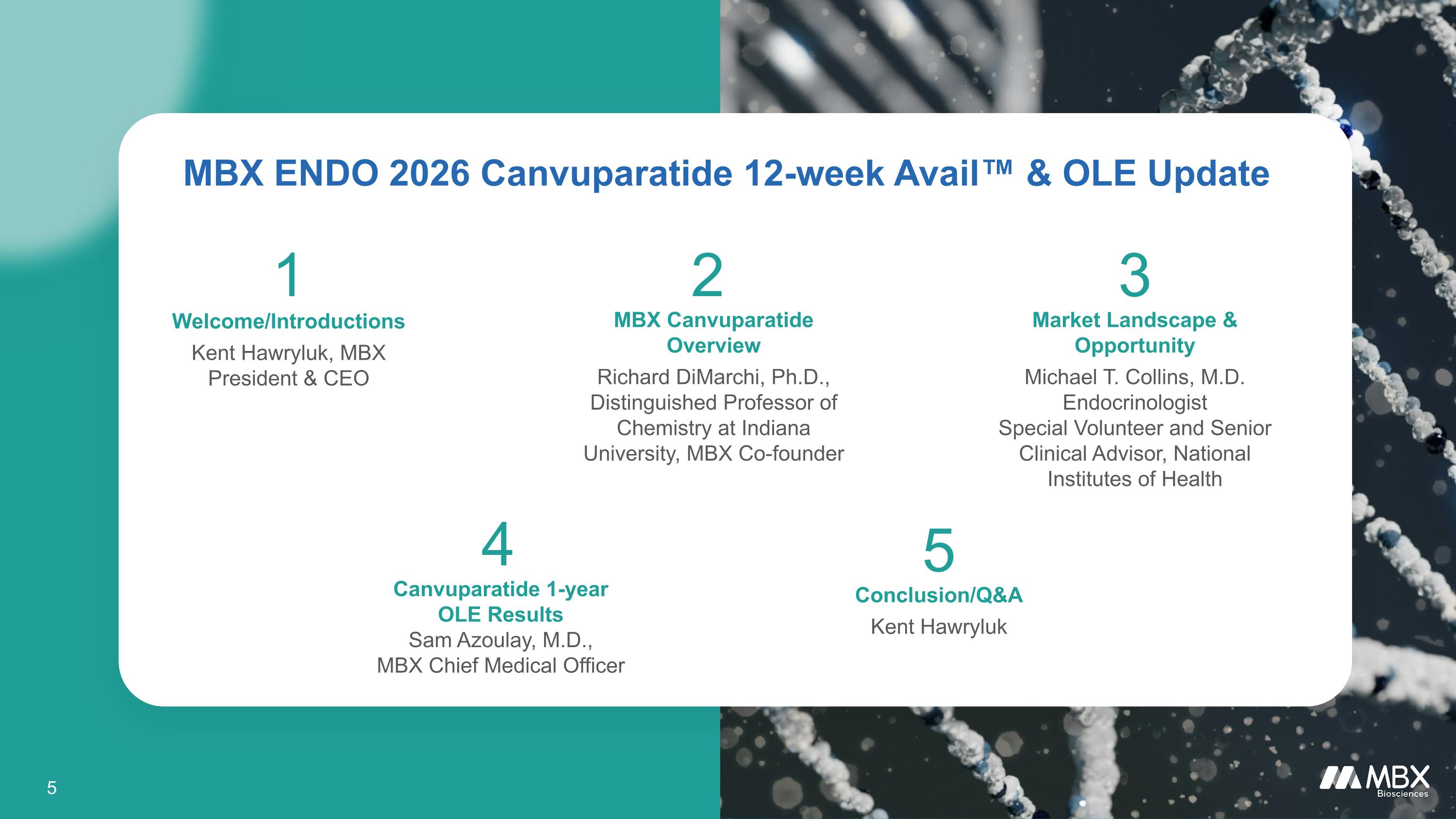
MBX ENDO 2026 Canvuparatide 12-week Avail™ & OLE Update Welcome/Introductions Kent Hawryluk, MBX President & CEO 1 Market Landscape & Opportunity Michael T. Collins, M.D. Endocrinologist Special Volunteer and Senior Clinical Advisor, National Institutes of Health 3 MBX Canvuparatide Overview Richard DiMarchi, Ph.D., Distinguished Professor of Chemistry at Indiana University, MBX Co-founder 2 Canvuparatide 1-year OLE Results Sam Azoulay, M.D., �MBX Chief Medical Officer 4 Conclusion/Q&A Kent Hawryluk 5

MBX Proprietary PEP™ Platform Richard DiMarchi, PhD MBX Scientific Co-Founder Distinguished Professor of Chemistry and Gill Chair in Biomolecular Sciences at Indiana University
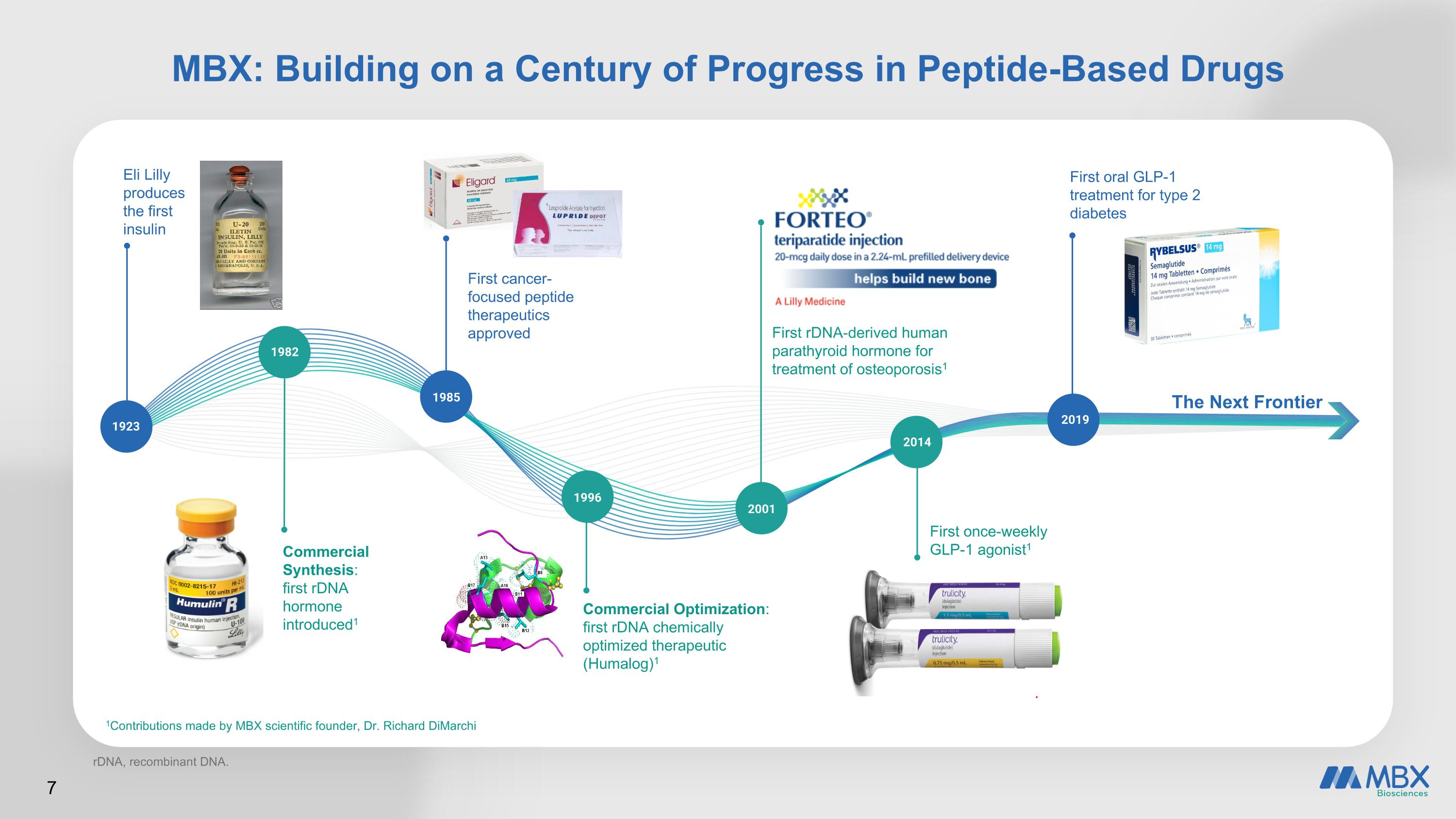
First cancer-focused peptide therapeutics approved First oral GLP-1 treatment for type 2 diabetes Eli Lilly produces the first insulin First rDNA-derived human parathyroid hormone for treatment of osteoporosis1 First once-weekly GLP-1 agonist1 2001 2014 2019 1996 1985 1982 1923 1Contributions made by MBX scientific founder, Dr. Richard DiMarchi Commercial Synthesis: �first rDNA hormone introduced1 Commercial Optimization: first rDNA chemically optimized therapeutic (Humalog)1 MBX: Building on a Century of Progress in Peptide-Based Drugs The Next Frontier rDNA, recombinant DNA.
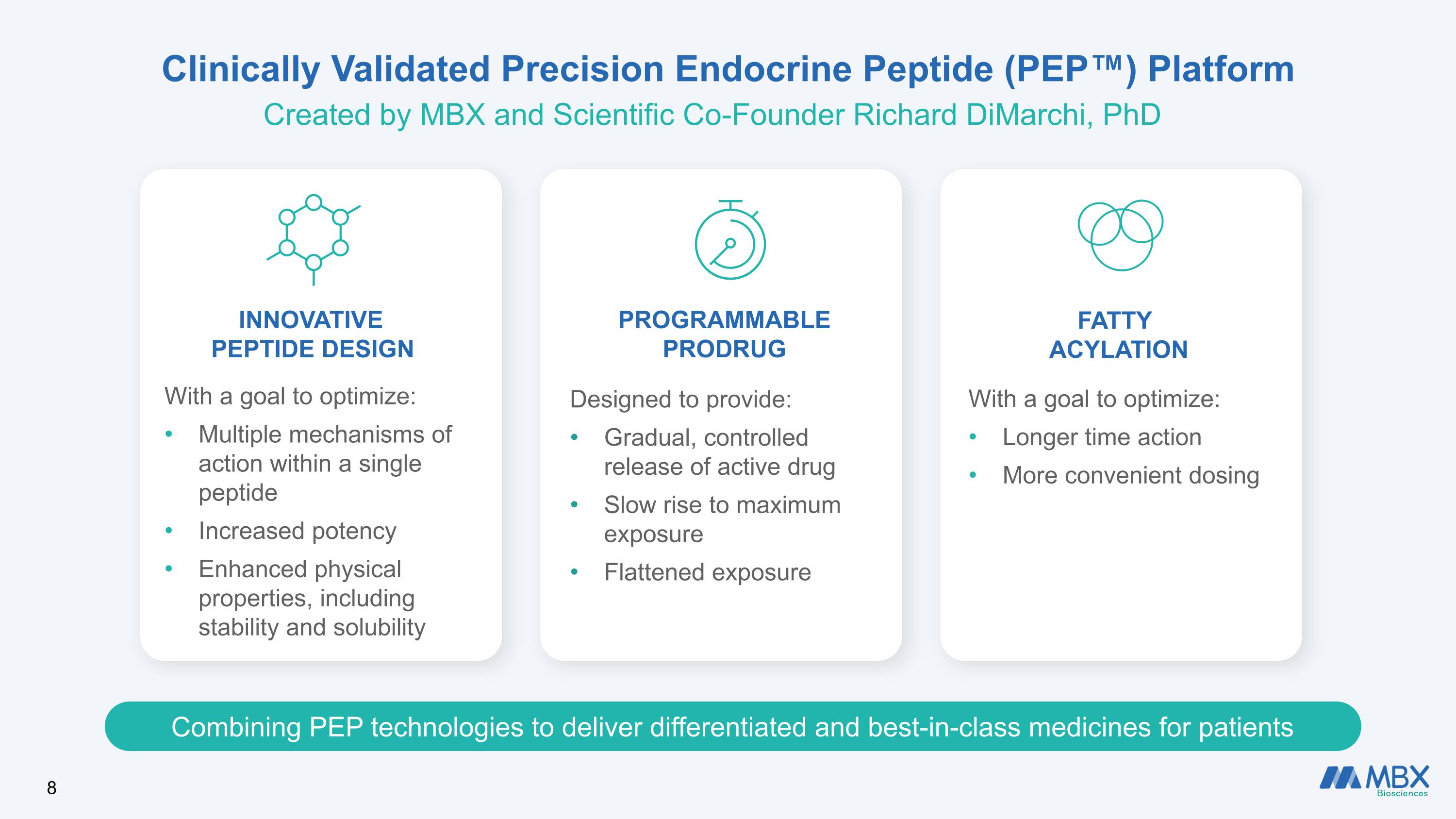
Clinically Validated Precision Endocrine Peptide (PEP™) Platform Created by MBX and Scientific Co-Founder Richard DiMarchi, PhD INNOVATIVE �PEPTIDE DESIGN With a goal to optimize: Multiple mechanisms of action within a single peptide Increased potency Enhanced physical properties, including stability and solubility PROGRAMMABLE PRODRUG Designed to provide: Gradual, controlled release of active drug Slow rise to maximum exposure Flattened exposure Fatty Acylation With a goal to optimize: Longer time action More convenient dosing Combining PEP technologies to deliver differentiated and best-in-class medicines for patients
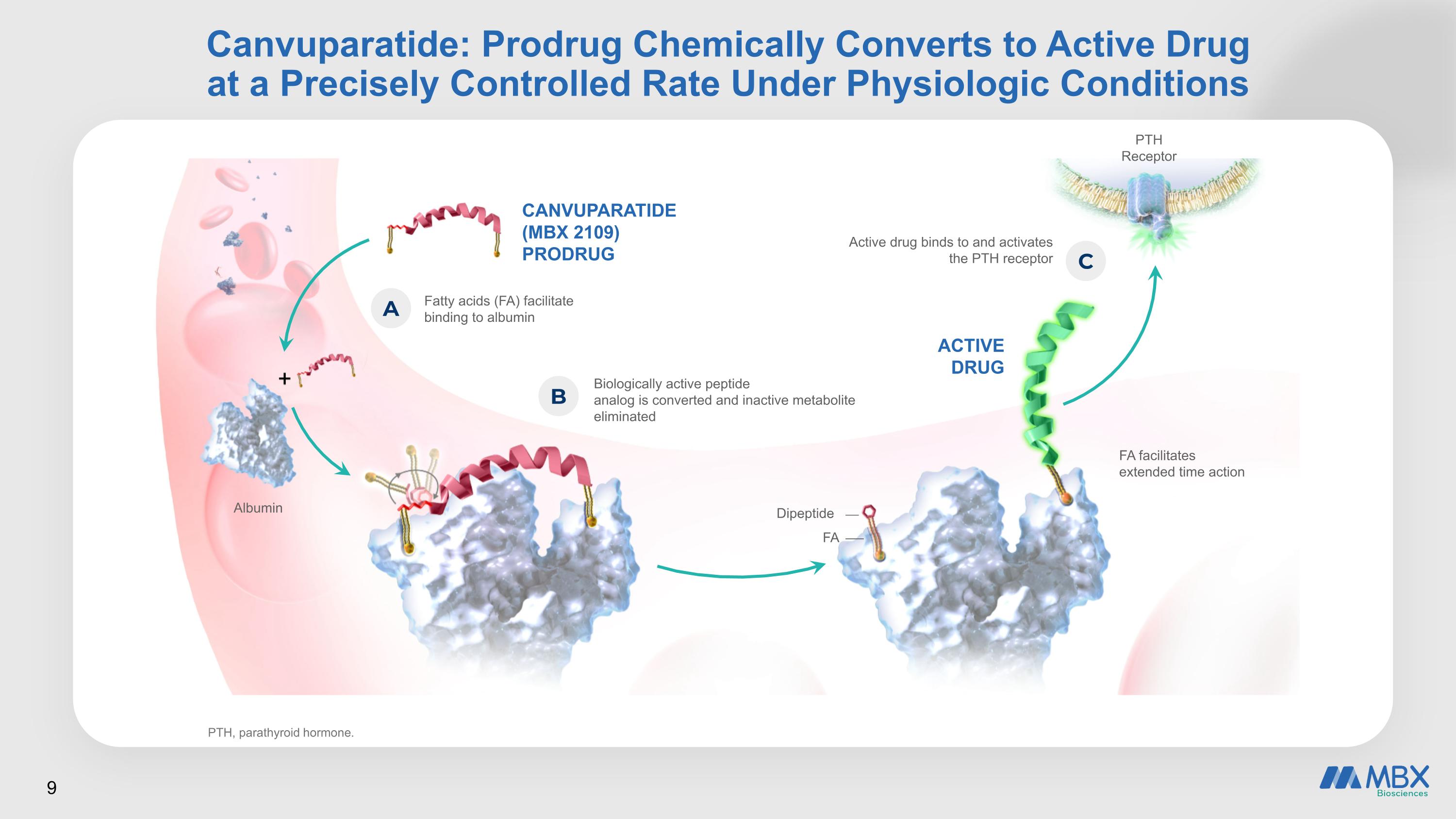
Canvuparatide: Prodrug Chemically Converts to Active Drug �at a Precisely Controlled Rate Under Physiologic Conditions Biologically active peptide �analog is converted and inactive metabolite eliminated Canvuparatide (MBX 2109) PRODRUG Dipeptide ACTIVE DRUG Fatty acids (FA) facilitate binding to albumin PTH Receptor FA Albumin FA facilitates extended time action Active drug binds to and activates the PTH receptor A B C PTH, parathyroid hormone.

Hypoparathyroidism Market Landscape Michael T. Collins, M.D. Endocrinologist Special Volunteer and Senior Clinical Advisor at the National Institutes of Health
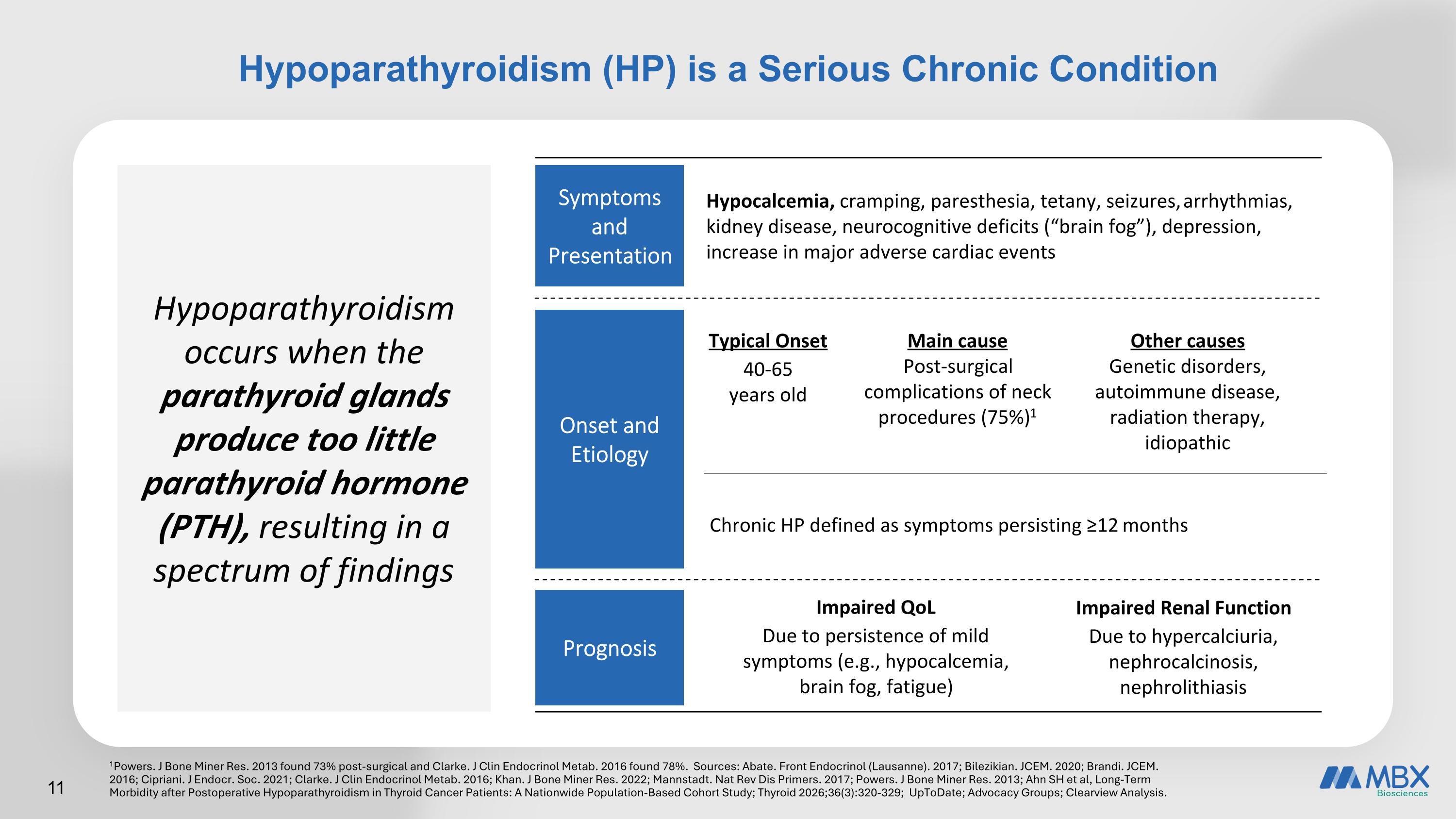
Hypoparathyroidism (HP) is a Serious Chronic Condition Hypoparathyroidism occurs when the parathyroid glands produce too little parathyroid hormone (PTH), resulting in a spectrum of findings Onset and Etiology Symptoms and Presentation Hypocalcemia, cramping, paresthesia, tetany, seizures, arrhythmias, kidney disease, neurocognitive deficits (“brain fog”), depression, increase in major adverse cardiac events Prognosis Impaired QoL Due to persistence of mild symptoms (e.g., hypocalcemia, brain fog, fatigue) 1Powers. J Bone Miner Res. 2013 found 73% post-surgical and Clarke. J Clin Endocrinol Metab. 2016 found 78%. Sources: Abate. Front Endocrinol (Lausanne). 2017; Bilezikian. JCEM. 2020; Brandi. JCEM. 2016; Cipriani. J Endocr. Soc. 2021; Clarke. J Clin Endocrinol Metab. 2016; Khan. J Bone Miner Res. 2022; Mannstadt. Nat Rev Dis Primers. 2017; Powers. J Bone Miner Res. 2013; Ahn SH et al, Long-Term Morbidity after Postoperative Hypoparathyroidism in Thyroid Cancer Patients: A Nationwide Population-Based Cohort Study; Thyroid 2026;36(3):320-329; UpToDate; Advocacy Groups; Clearview Analysis. Typical Onset 40-65 years old Main cause Post-surgical complications of neck procedures (75%)1 Other causes Genetic disorders, autoimmune disease, radiation therapy, idiopathic Chronic HP defined as symptoms persisting ≥12 months Impaired Renal Function Due to hypercalciuria, nephrocalcinosis, nephrolithiasis
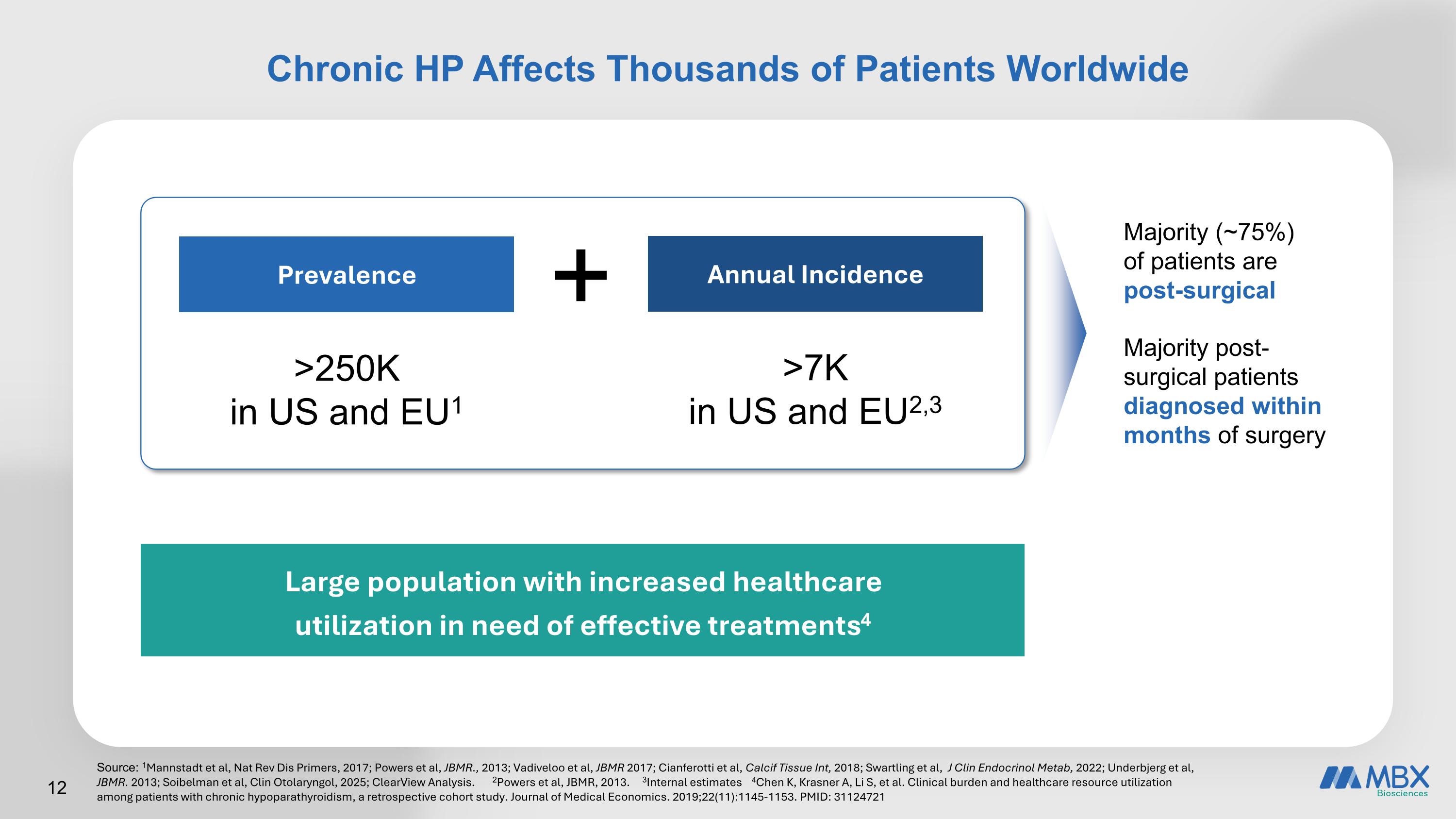
Chronic HP Affects Thousands of Patients Worldwide Source: 1Mannstadt et al, Nat Rev Dis Primers, 2017; Powers et al, JBMR., 2013; Vadiveloo et al, JBMR 2017; Cianferotti et al, Calcif Tissue Int, 2018; Swartling et al, J Clin Endocrinol Metab, 2022; Underbjerg et al, JBMR. 2013; Soibelman et al, Clin Otolaryngol, 2025; ClearView Analysis. 2Powers et al, JBMR, 2013. 3Internal estimates 4Chen K, Krasner A, Li S, et al. Clinical burden and healthcare resource utilization among patients with chronic hypoparathyroidism, a retrospective cohort study. Journal of Medical Economics. 2019;22(11):1145-1153. PMID: 31124721 + Prevalence >250K in US and EU1 Annual Incidence >7K in US and EU2,3 Large population with increased healthcare utilization in need of effective treatments4 Majority (~75%) of patients are post-surgical Majority post-surgical patients diagnosed within months of surgery
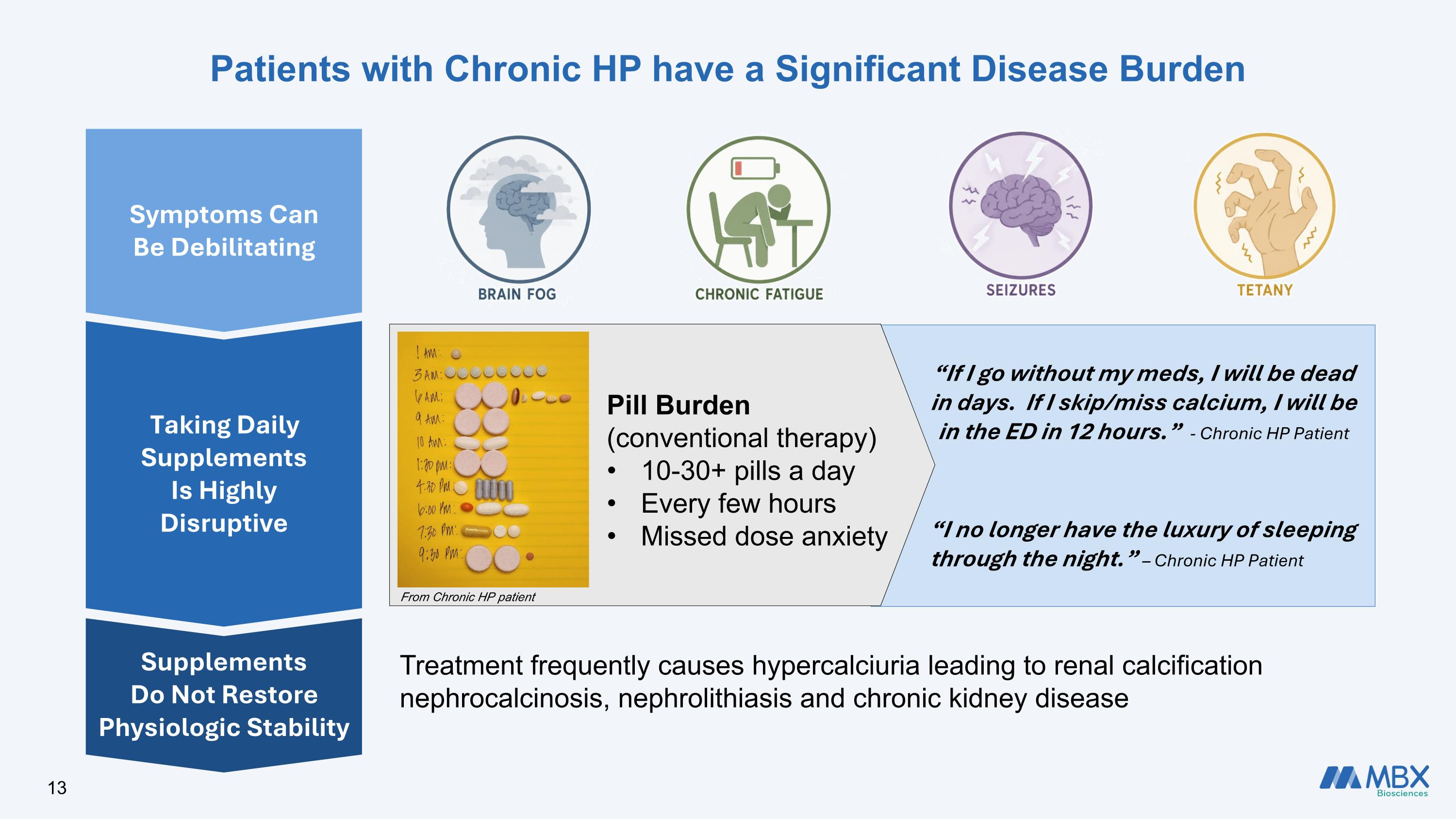
Patients with Chronic HP have a Significant Disease Burden Treatment frequently causes hypercalciuria leading to renal calcification nephrocalcinosis, nephrolithiasis and chronic kidney disease “If I go without my meds, I will be dead in days. If I skip/miss calcium, I will be in the ED in 12 hours.” - Chronic HP Patient “I no longer have the luxury of sleeping through the night.” – Chronic HP Patient Pill Burden (conventional therapy) 10-30+ pills a day Every few hours Missed dose anxiety From Chronic HP patient Symptoms Can Be Debilitating Taking Daily Supplements Is Highly Disruptive Supplements Do Not Restore Physiologic Stability
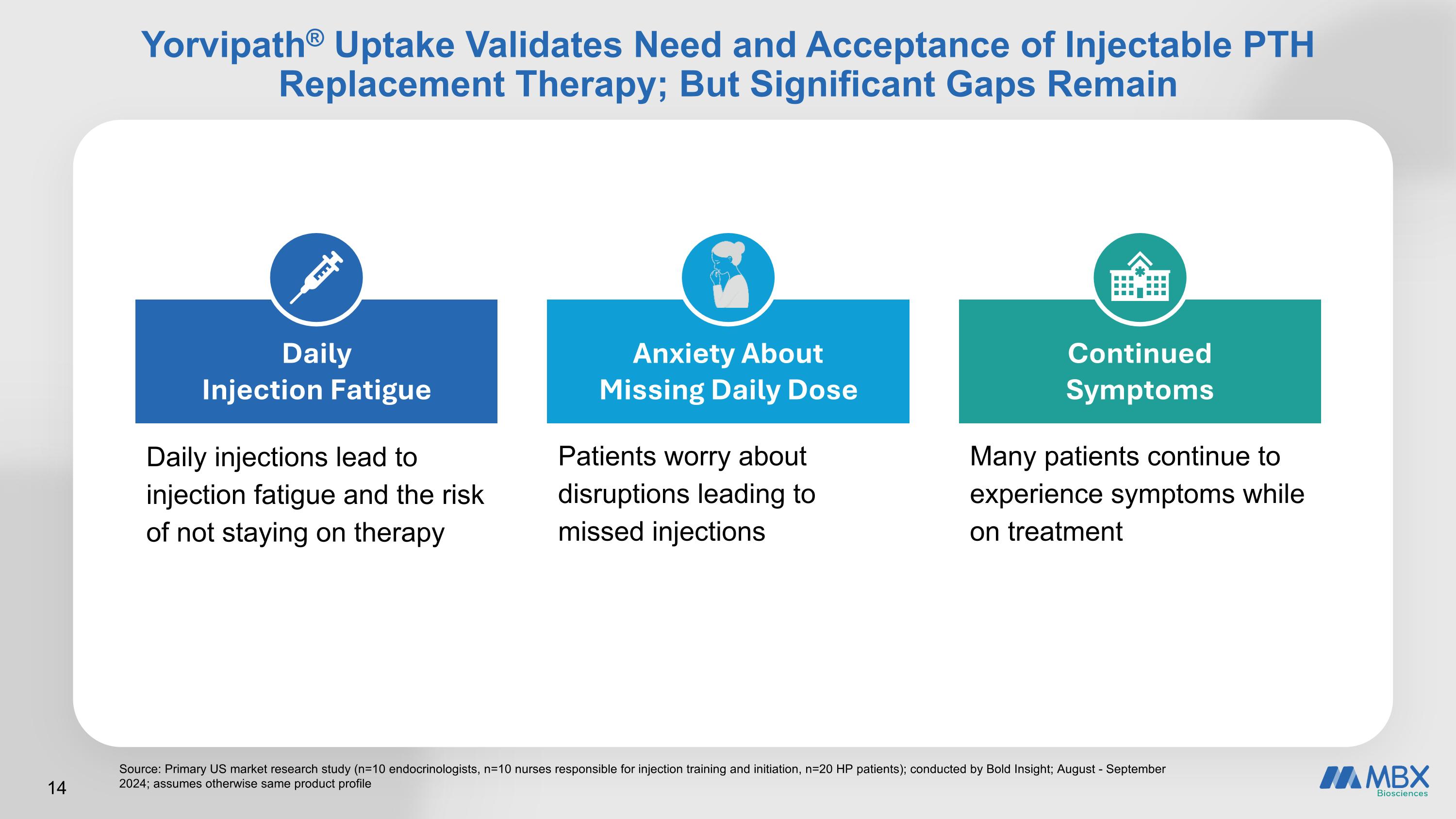
Yorvipath® Uptake Validates Need and Acceptance of Injectable PTH Replacement Therapy; But Significant Gaps Remain Source: Primary US market research study (n=10 endocrinologists, n=10 nurses responsible for injection training and initiation, n=20 HP patients); conducted by Bold Insight; August - September 2024; assumes otherwise same product profile Continued Symptoms Many patients continue to experience symptoms while on treatment Daily injections lead to injection fatigue and the risk of not staying on therapy Daily Injection Fatigue Anxiety About Missing Daily Dose Patients worry about disruptions leading to missed injections
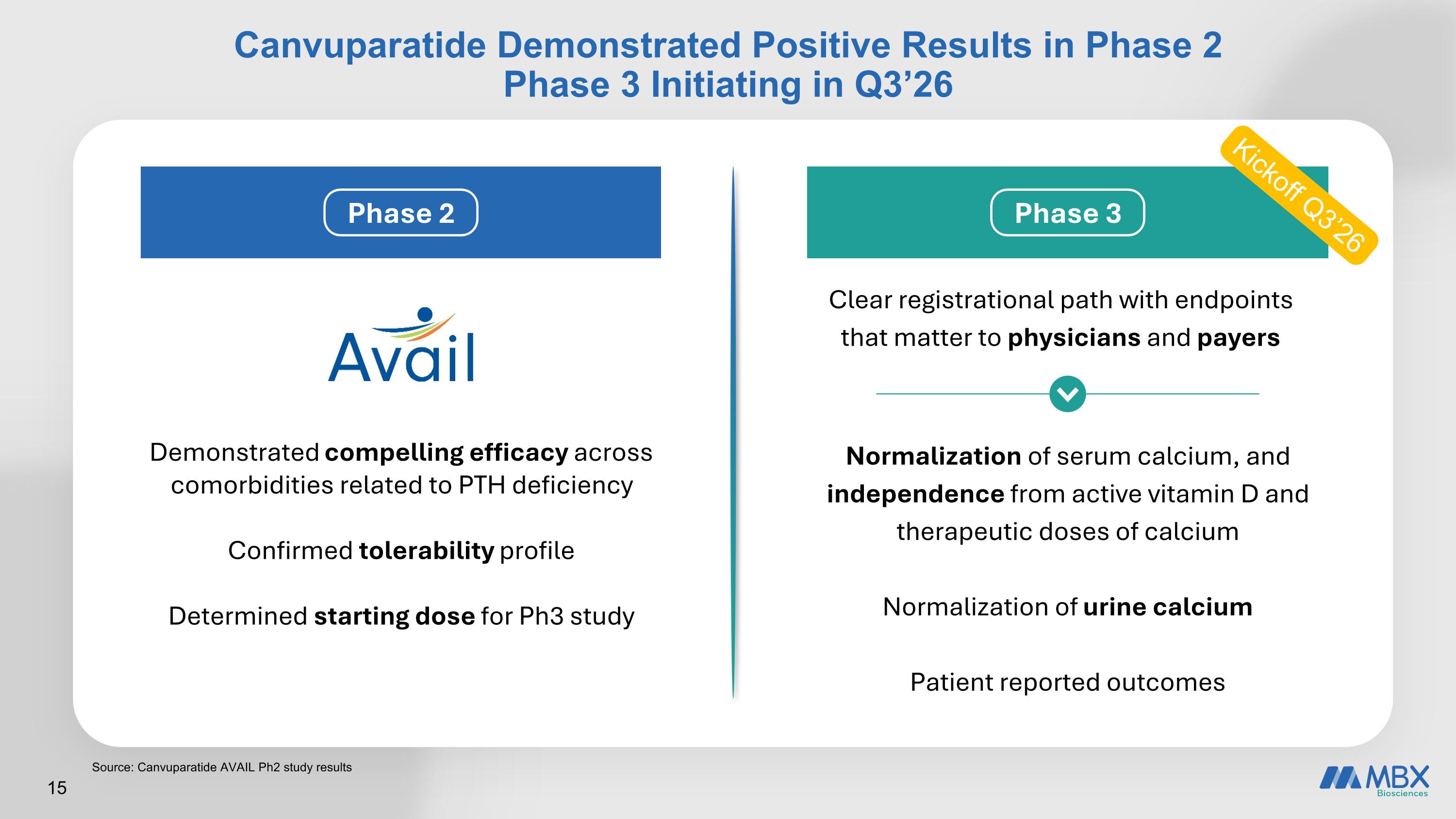
Canvuparatide Demonstrated Positive Results in Phase 2�Phase 3 Initiating in Q3’26 Source: Canvuparatide AVAIL Ph2 study results Phase 2 Clear registrational path with endpoints that matter to physicians and payers Phase 3 Kickoff Q3’26 Demonstrated compelling efficacy across comorbidities related to PTH deficiency Confirmed tolerability profile Determined starting dose for Ph3 study Normalization of serum calcium, and independence from active vitamin D and therapeutic doses of calcium Normalization of urine calcium Patient reported outcomes
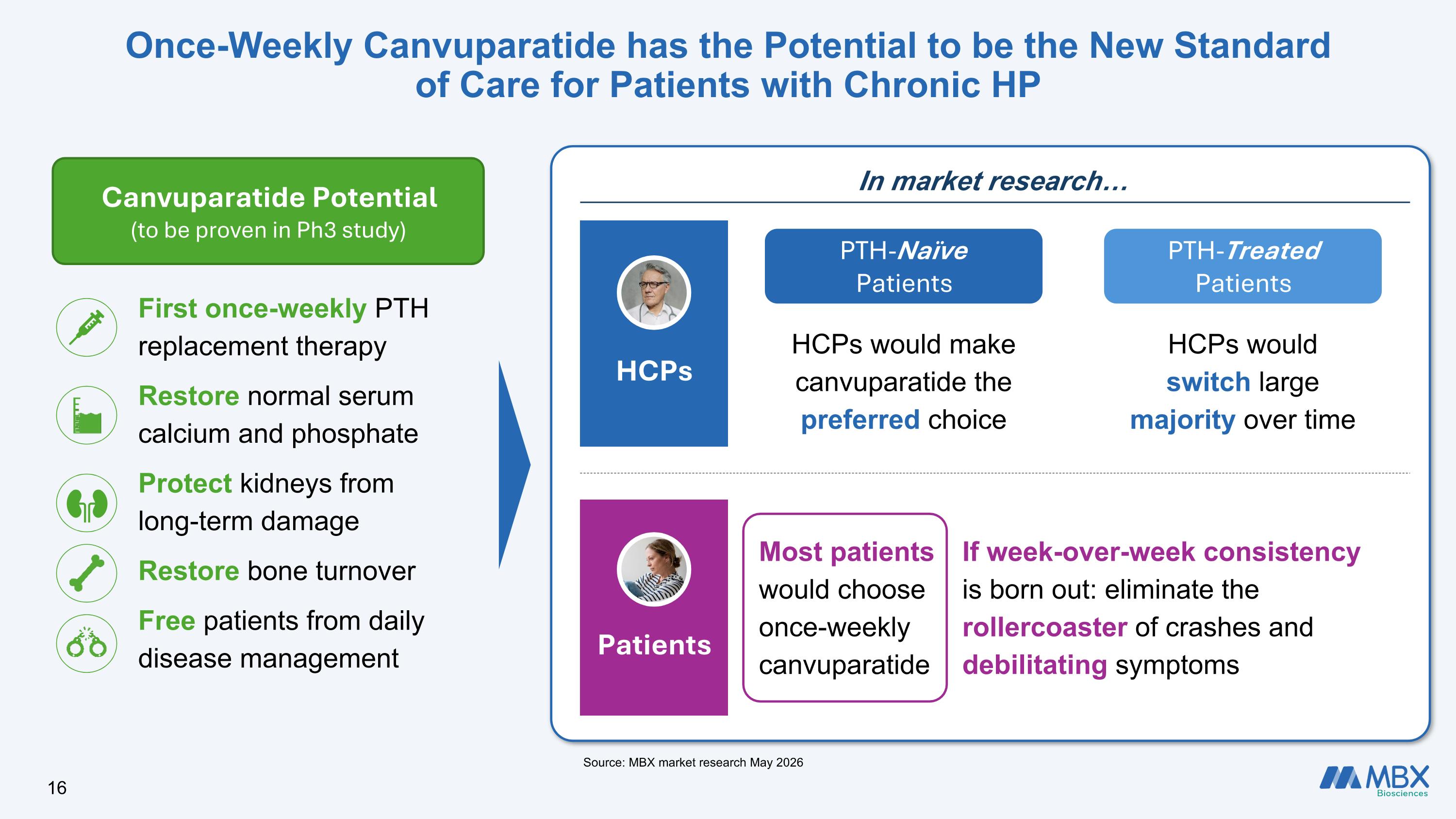
Once-Weekly Canvuparatide has the Potential to be the New Standard of Care for Patients with Chronic HP Source: MBX market research May 2026 First once-weekly PTH replacement therapy Restore normal serum calcium and phosphate Protect kidneys from long-term damage Restore bone turnover Free patients from daily disease management Canvuparatide Potential (to be proven in Ph3 study) Patients HCPs would make canvuparatide the preferred choice PTH-Naïve Patients HCPs would switch large majority over time PTH-Treated Patients If week-over-week consistency is born out: eliminate the rollercoaster of crashes and debilitating symptoms Most patients would choose once-weekly canvuparatide HCPs In market research…
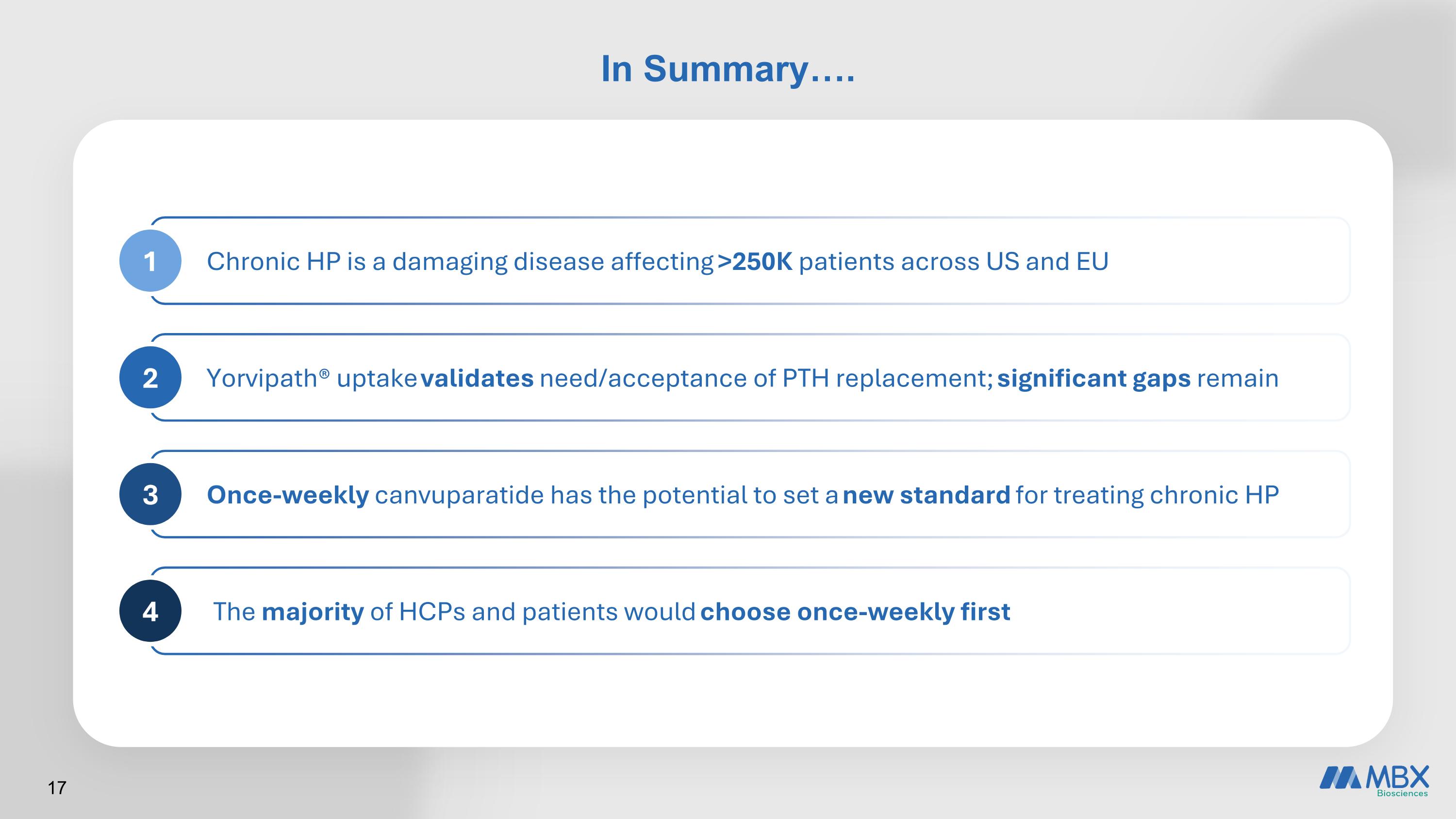
In Summary…. Chronic HP is a damaging disease affecting >250K patients across US and EU 1 Yorvipath® uptake validates need/acceptance of PTH replacement; significant gaps remain 2 Once-weekly canvuparatide has the potential to set a new standard for treating chronic HP 3 The majority of HCPs and patients would choose once-weekly first 4
Canvuparatide One-Year OLE Results Sam Azoulay, M.D. MBX Chief Medical Officer
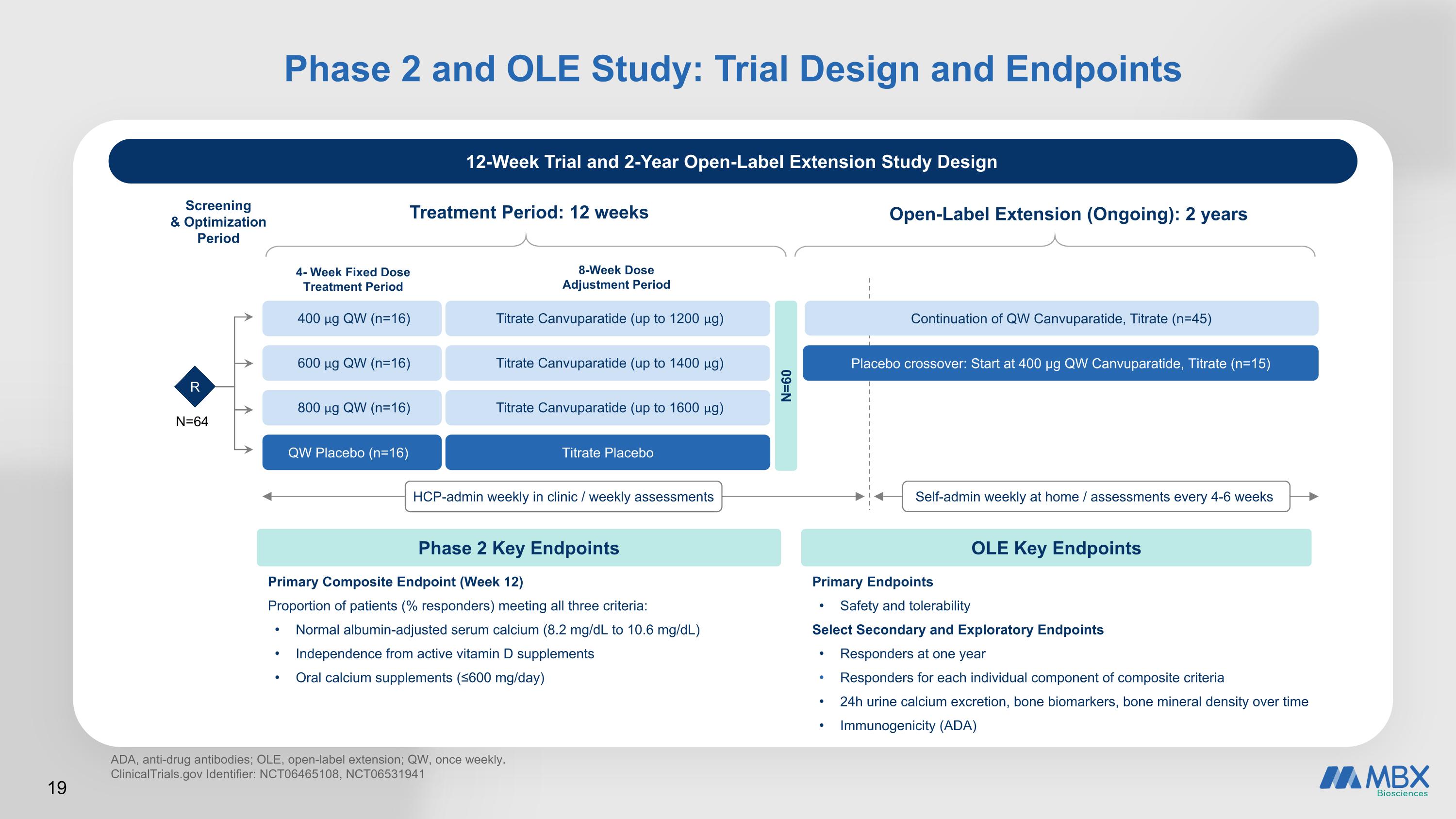
Phase 2 and OLE Study: Trial Design and Endpoints ADA, anti-drug antibodies; OLE, open-label extension; QW, once weekly. ClinicalTrials.gov Identifier: NCT06465108, NCT06531941 Phase 2 Key Endpoints Screening & Optimization Period Treatment Period: 12 weeks 4- Week Fixed Dose Treatment Period 8-Week Dose �Adjustment Period 800 μg QW (n=16) N=64 600 μg QW (n=16) 400 μg QW (n=16) QW Placebo (n=16) Titrate Canvuparatide (up to 1600 μg) Titrate Canvuparatide (up to 1400 μg) Titrate Canvuparatide (up to 1200 μg) Titrate Placebo R Open-Label Extension (Ongoing): 2 years N=60 Primary Composite Endpoint (Week 12) Proportion of patients (% responders) meeting all three criteria: Normal albumin-adjusted serum calcium (8.2 mg/dL to 10.6 mg/dL) Independence from active vitamin D supplements Oral calcium supplements (≤600 mg/day) Primary Endpoints Safety and tolerability Select Secondary and Exploratory Endpoints Responders at one year Responders for each individual component of composite criteria 24h urine calcium excretion, bone biomarkers, bone mineral density over time Immunogenicity (ADA) 12-Week Trial and 2-Year Open-Label Extension Study Design Continuation of QW Canvuparatide, Titrate (n=45) Placebo crossover: Start at 400 μg QW Canvuparatide, Titrate (n=15) HCP-admin weekly in clinic / weekly assessments Self-admin weekly at home / assessments every 4-6 weeks OLE Key Endpoints
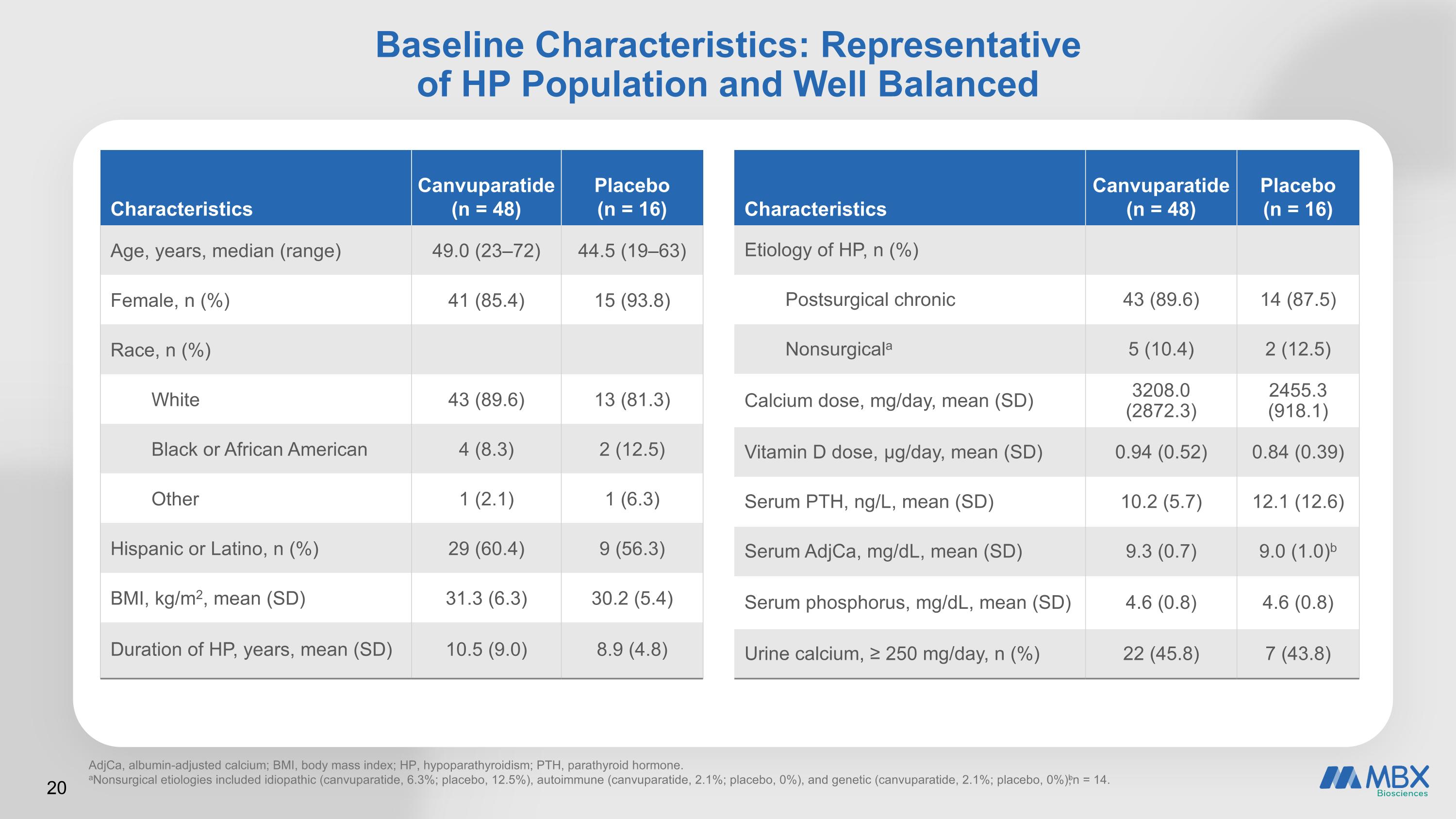
Baseline Characteristics: Representative �of HP Population and Well Balanced AdjCa, albumin-adjusted calcium; BMI, body mass index; HP, hypoparathyroidism; PTH, parathyroid hormone. aNonsurgical etiologies included idiopathic (canvuparatide, 6.3%; placebo, 12.5%), autoimmune (canvuparatide, 2.1%; placebo, 0%), and genetic (canvuparatide, 2.1%; placebo, 0%); bn = 14. Characteristics Canvuparatide�(n = 48) Placebo �(n = 16) Age, years, median (range) 49.0 (23–72) 44.5 (19–63) Female, n (%) 41 (85.4) 15 (93.8) Race, n (%) White 43 (89.6) 13 (81.3) Black or African American 4 (8.3) 2 (12.5) Other 1 (2.1) 1 (6.3) Hispanic or Latino, n (%) 29 (60.4) 9 (56.3) BMI, kg/m2, mean (SD) 31.3 (6.3) 30.2 (5.4) Duration of HP, years, mean (SD) 10.5 (9.0) 8.9 (4.8) Characteristics Canvuparatide�(n = 48) Placebo �(n = 16) Etiology of HP, n (%) Postsurgical chronic 43 (89.6) 14 (87.5) Nonsurgicala 5 (10.4) 2 (12.5) Calcium dose, mg/day, mean (SD) 3208.0�(2872.3) 2455.3�(918.1) Vitamin D dose, µg/day, mean (SD) 0.94 (0.52) 0.84 (0.39) Serum PTH, ng/L, mean (SD) 10.2 (5.7) 12.1 (12.6) Serum AdjCa, mg/dL, mean (SD) 9.3 (0.7) 9.0 (1.0)b Serum phosphorus, mg/dL, mean (SD) 4.6 (0.8) 4.6 (0.8) Urine calcium, ≥ 250 mg/day, n (%) 22 (45.8) 7 (43.8)
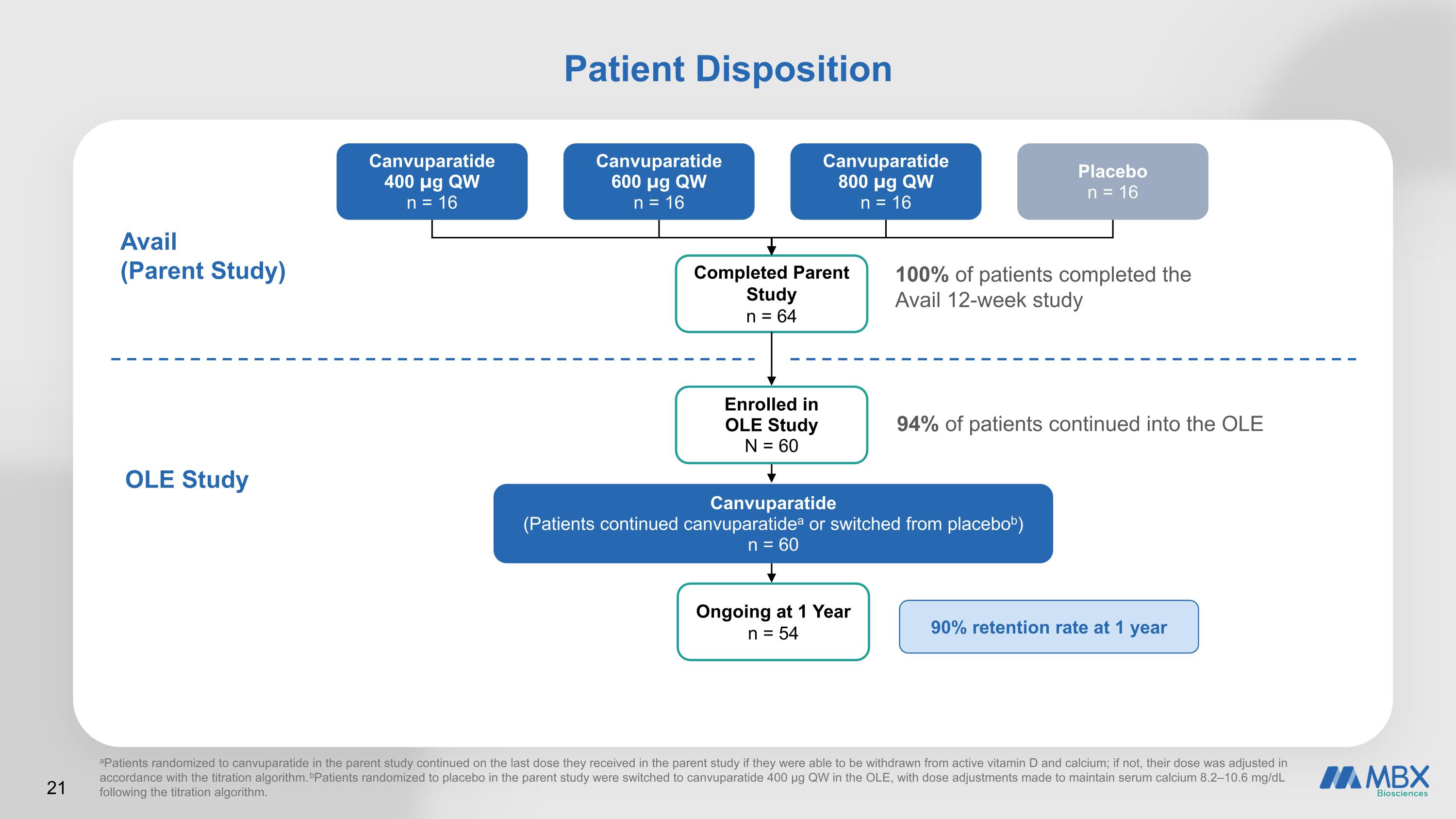
90% retention rate at 1 year Patient Disposition aPatients randomized to canvuparatide in the parent study continued on the last dose they received in the parent study if they were able to be withdrawn from active vitamin D and calcium; if not, their dose was adjusted in accordance with the titration algorithm. bPatients randomized to placebo in the parent study were switched to canvuparatide 400 µg QW in the OLE, with dose adjustments made to maintain serum calcium 8.2–10.6 mg/dL following the titration algorithm. OLE Study Avail �(Parent Study) Placebo n = 16 Completed Parent Study n = 64 Canvuparatide 800 μg QW n = 16 Canvuparatide 600 μg QW n = 16 Canvuparatide 400 μg QW n = 16 Canvuparatide�(Patients continued canvuparatidea or switched from placebob) n = 60 Enrolled in OLE Study N = 60 94% of patients continued into the OLE Ongoing at 1 Year n = 54 100% of patients completed the Avail 12-week study
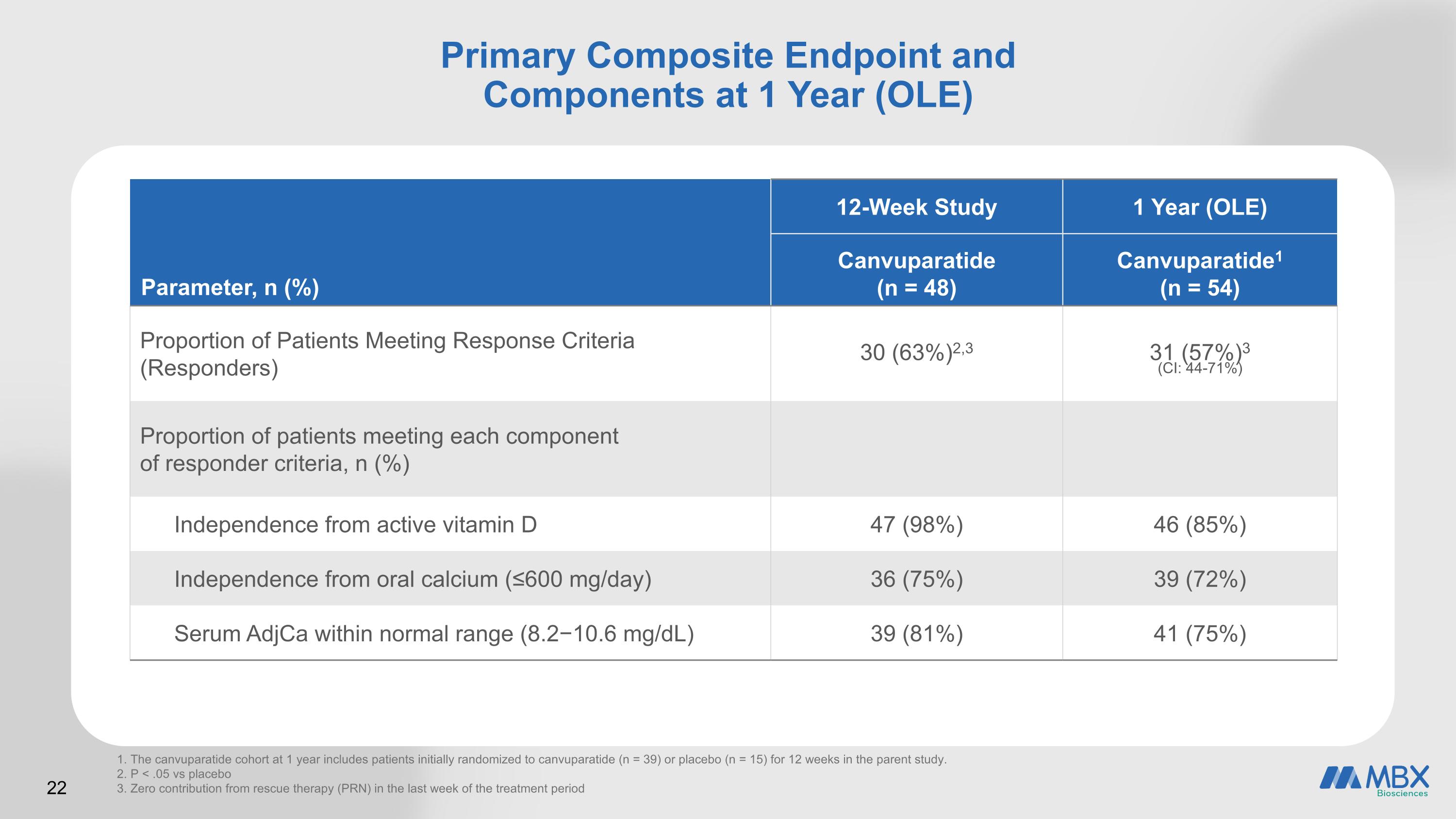
Primary Composite Endpoint and�Components at 1 Year (OLE) 1. The canvuparatide cohort at 1 year includes patients initially randomized to canvuparatide (n = 39) or placebo (n = 15) for 12 weeks in the parent study. 2. P < .05 vs placebo 3. Zero contribution from rescue therapy (PRN) in the last week of the treatment period Parameter, n (%) 12-Week Study 1 Year (OLE) Canvuparatide (n = 48) Canvuparatide1 (n = 54) Proportion of Patients Meeting Response Criteria (Responders) 30 (63%)2,3 31 (57%)3 (CI: 44-71%) Proportion of patients meeting each component �of responder criteria, n (%) Independence from active vitamin D 47 (98%) 46 (85%) Independence from oral calcium (≤600 mg/day) 36 (75%) 39 (72%) Serum AdjCa within normal range (8.2−10.6 mg/dL) 39 (81%) 41 (75%)
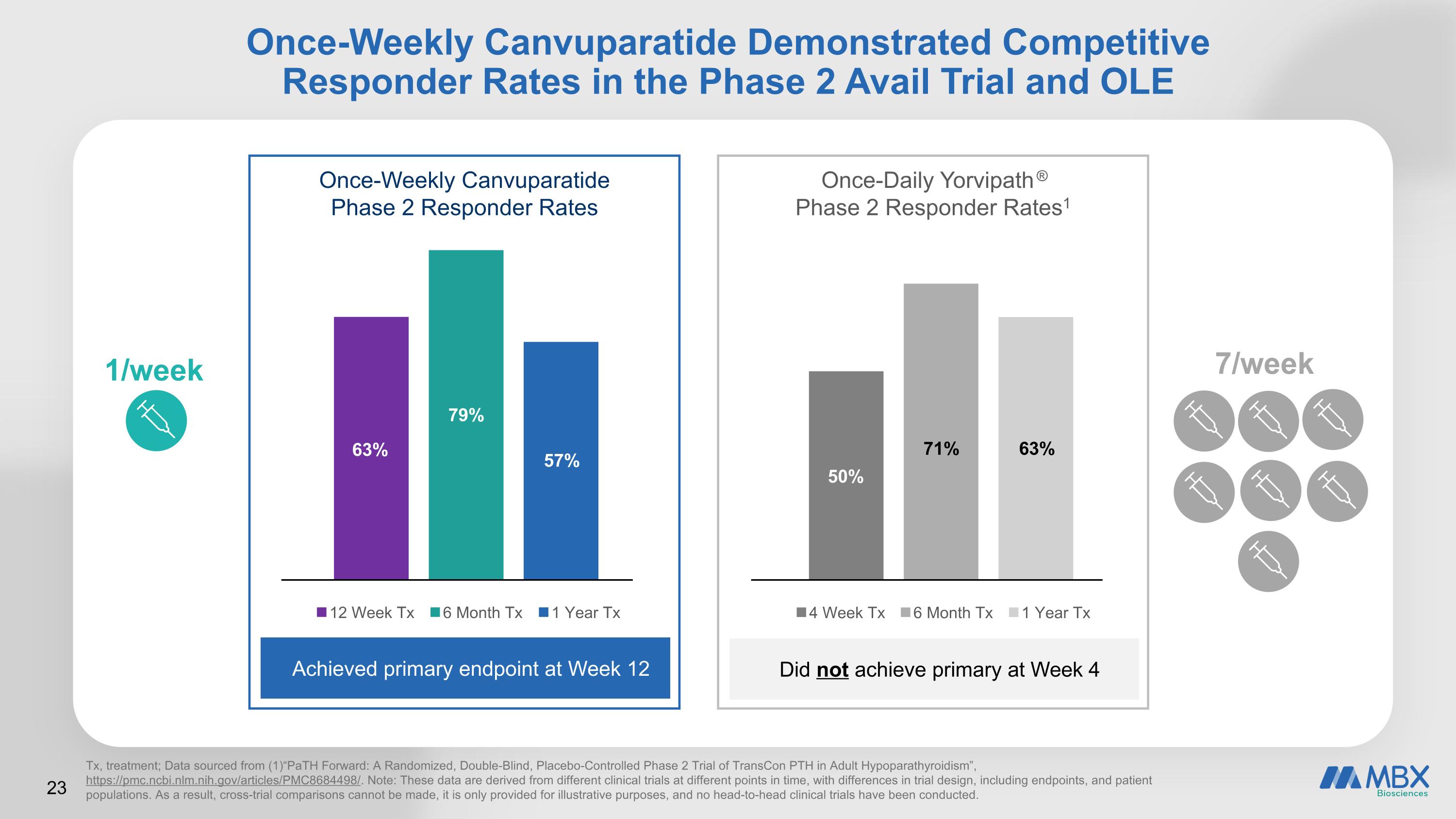
Once-Weekly Canvuparatide Demonstrated Competitive�Responder Rates in the Phase 2 Avail Trial and OLE Tx, treatment; Data sourced from (1)“PaTH Forward: A Randomized, Double-Blind, Placebo-Controlled Phase 2 Trial of TransCon PTH in Adult Hypoparathyroidism”, https://pmc.ncbi.nlm.nih.gov/articles/PMC8684498/. Note: These data are derived from different clinical trials at different points in time, with differences in trial design, including endpoints, and patient populations. As a result, cross-trial comparisons cannot be made, it is only provided for illustrative purposes, and no head-to-head clinical trials have been conducted. Achieved primary endpoint at Week 12 Did not achieve primary at Week 4 63% 57% 63% 50% Once-Weekly Canvuparatide �Phase 2 Responder Rates Once-Daily Yorvipath® �Phase 2 Responder Rates1 79% 71% 7/week 1/week
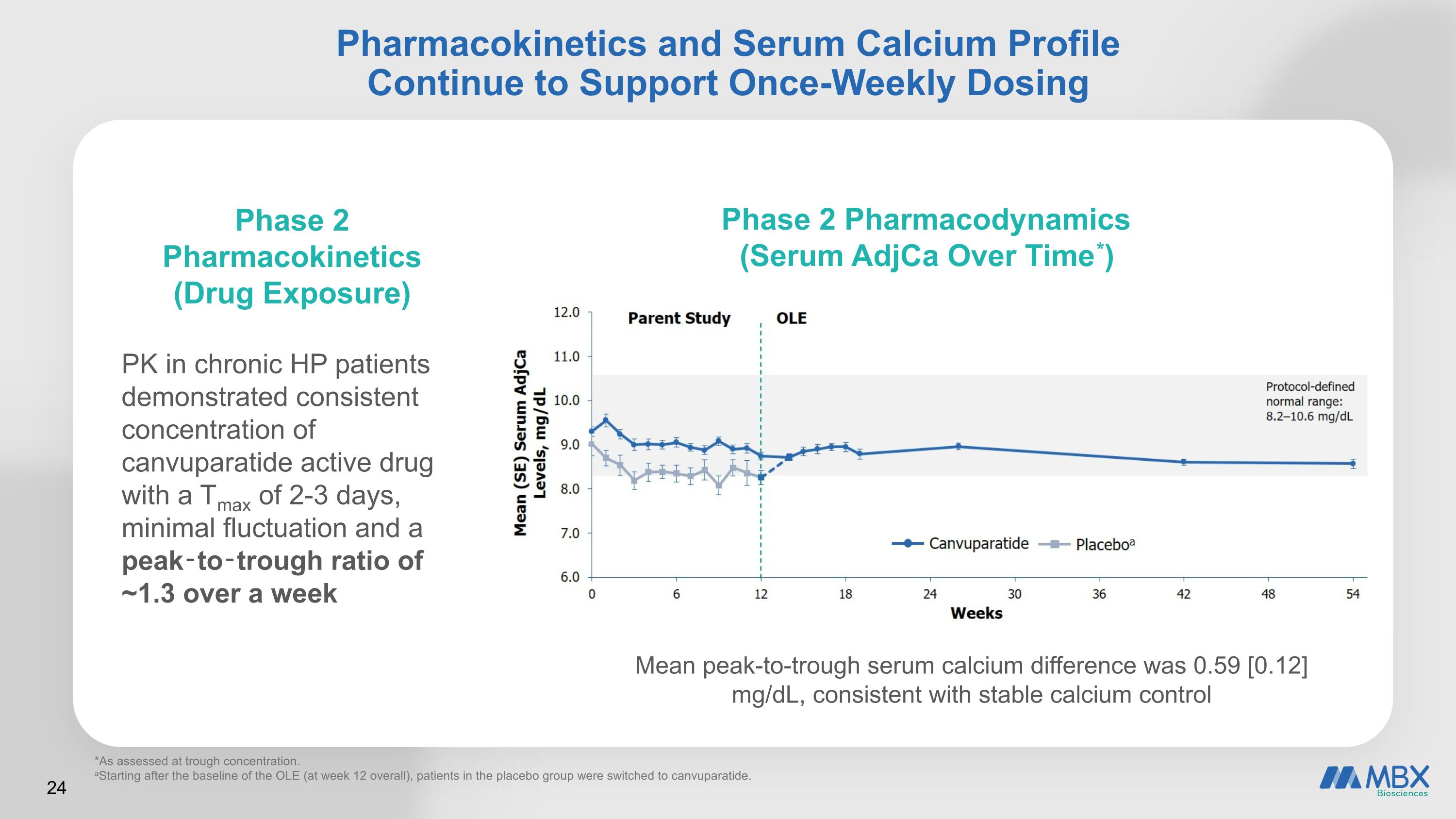
Pharmacokinetics and Serum Calcium Profile �Continue to Support Once-Weekly Dosing Phase 2 Pharmacodynamics �(Serum AdjCa Over Time*) Phase 2 Pharmacokinetics �(Drug Exposure) PK in chronic HP patients demonstrated consistent concentration of canvuparatide active drug with a Tmax of 2-3 days, minimal fluctuation and a peak‑to‑trough ratio of ~1.3 over a week Mean peak-to-trough serum calcium difference was 0.59 [0.12] mg/dL, consistent with stable calcium control *As assessed at trough concentration. aStarting after the baseline of the OLE (at week 12 overall), patients in the placebo group were switched to canvuparatide.
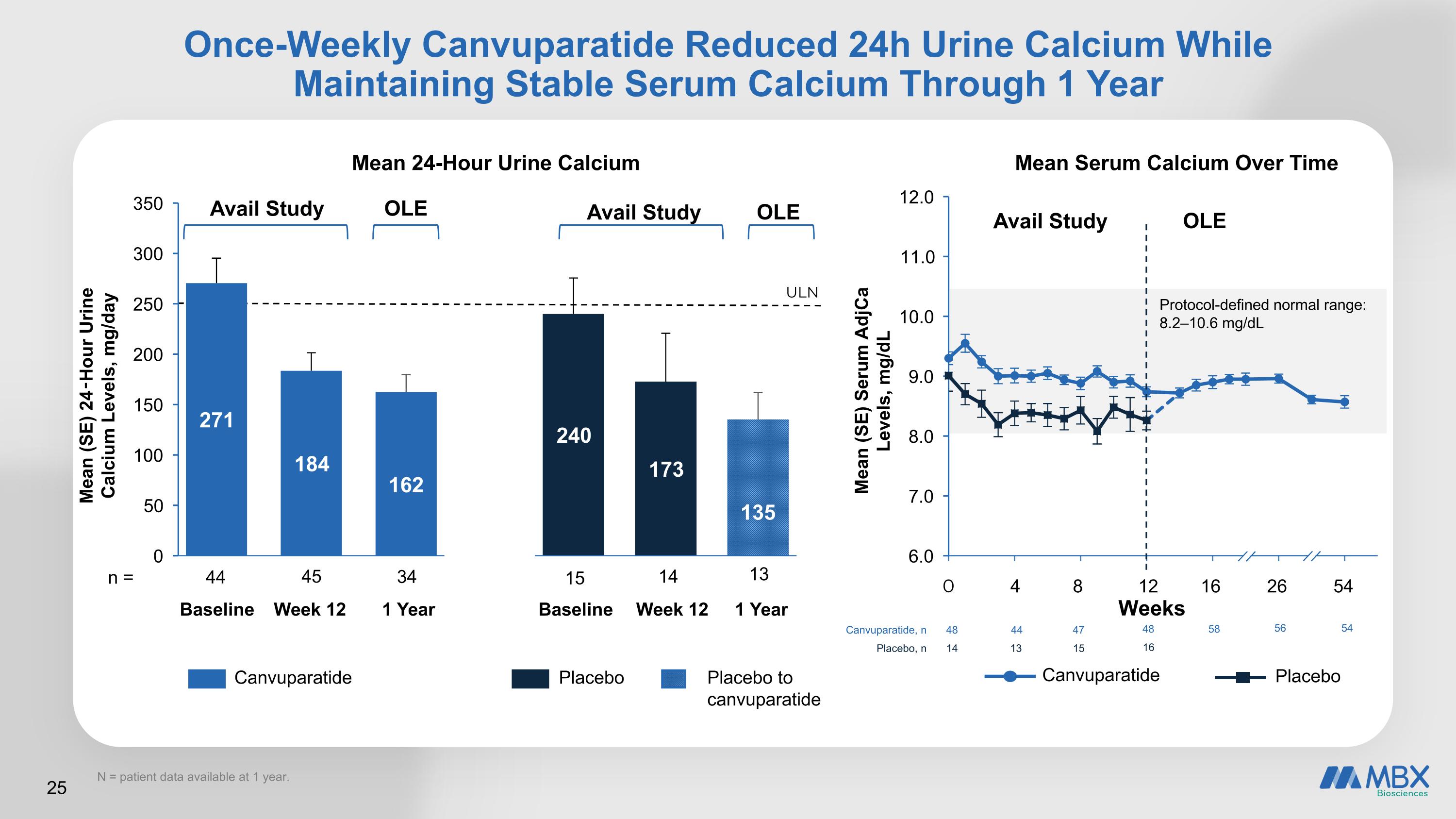
Once-Weekly Canvuparatide Reduced 24h Urine Calcium While Maintaining Stable Serum Calcium Through 1 Year ULN Canvuparatide Baseline Week 12 1 Year Baseline Week 12 1 Year n = 44 45 34 15 14 13 Placebo OLE Avail Study OLE Avail Study Mean 24-Hour Urine Calcium Mean (SE) 24‑Hour Urine Calcium Levels, mg/day Placebo to canvuparatide Mean Serum Calcium Over Time OLE Avail Study Protocol-defined normal range: 8.2–10.6 mg/dL 0 4 8 12 16 26 54 Canvuparatide Placebo Canvuparatide, n Placebo, n 44 48 13 14 47 48 58 15 16 56 54 N = patient data available at 1 year.
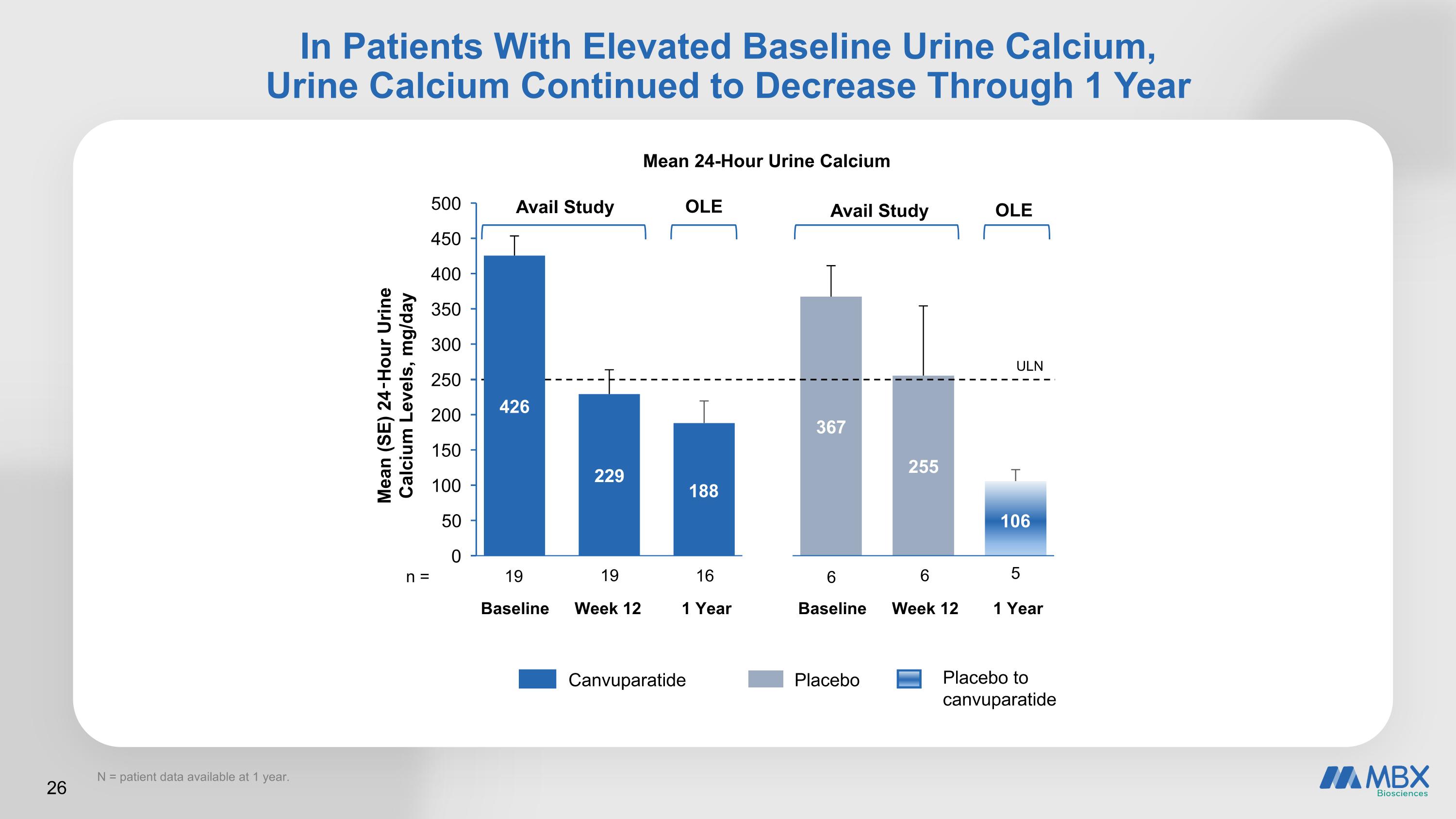
In Patients With Elevated Baseline Urine Calcium,�Urine Calcium Continued to Decrease Through 1 Year ULN Canvuparatide n = 19 19 16 6 6 5 Placebo Placebo to canvuparatide OLE Avail Study OLE Avail Study Mean 24-Hour Urine Calcium Mean (SE) 24‑Hour Urine Calcium Levels, mg/day Baseline Week 12 1 Year Baseline Week 12 1 Year N = patient data available at 1 year.
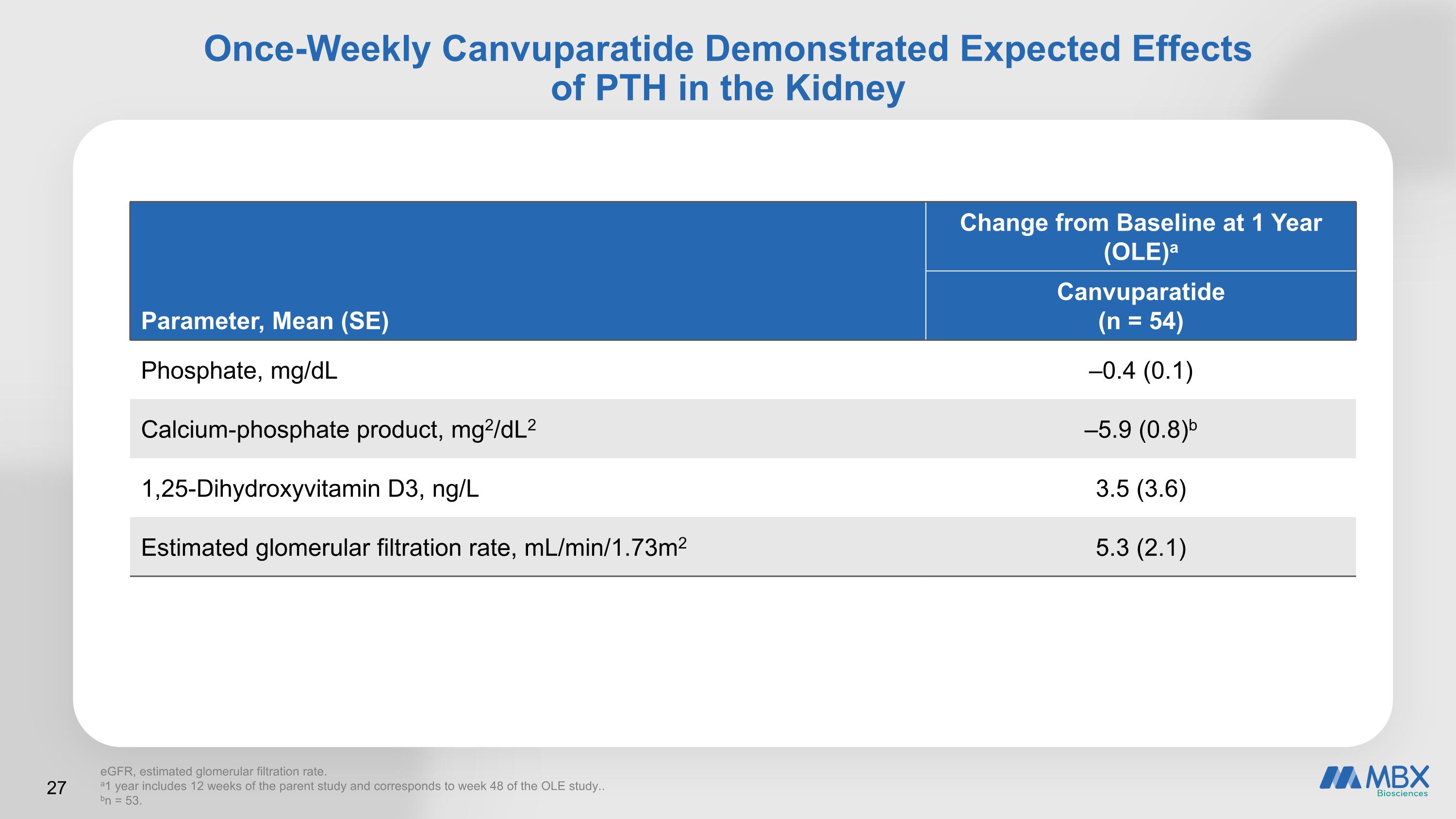
Once-Weekly Canvuparatide Demonstrated Expected Effects �of PTH in the Kidney Parameter, Mean (SE) Change from Baseline at 1 Year (OLE)a Canvuparatide (n = 54) Phosphate, mg/dL –0.4 (0.1) Calcium-phosphate product, mg2/dL2 –5.9 (0.8)b 1,25-Dihydroxyvitamin D3, ng/L 3.5 (3.6) Estimated glomerular filtration rate, mL/min/1.73m2 5.3 (2.1) eGFR, estimated glomerular filtration rate. �a1 year includes 12 weeks of the parent study and corresponds to week 48 of the OLE study..�bn = 53.
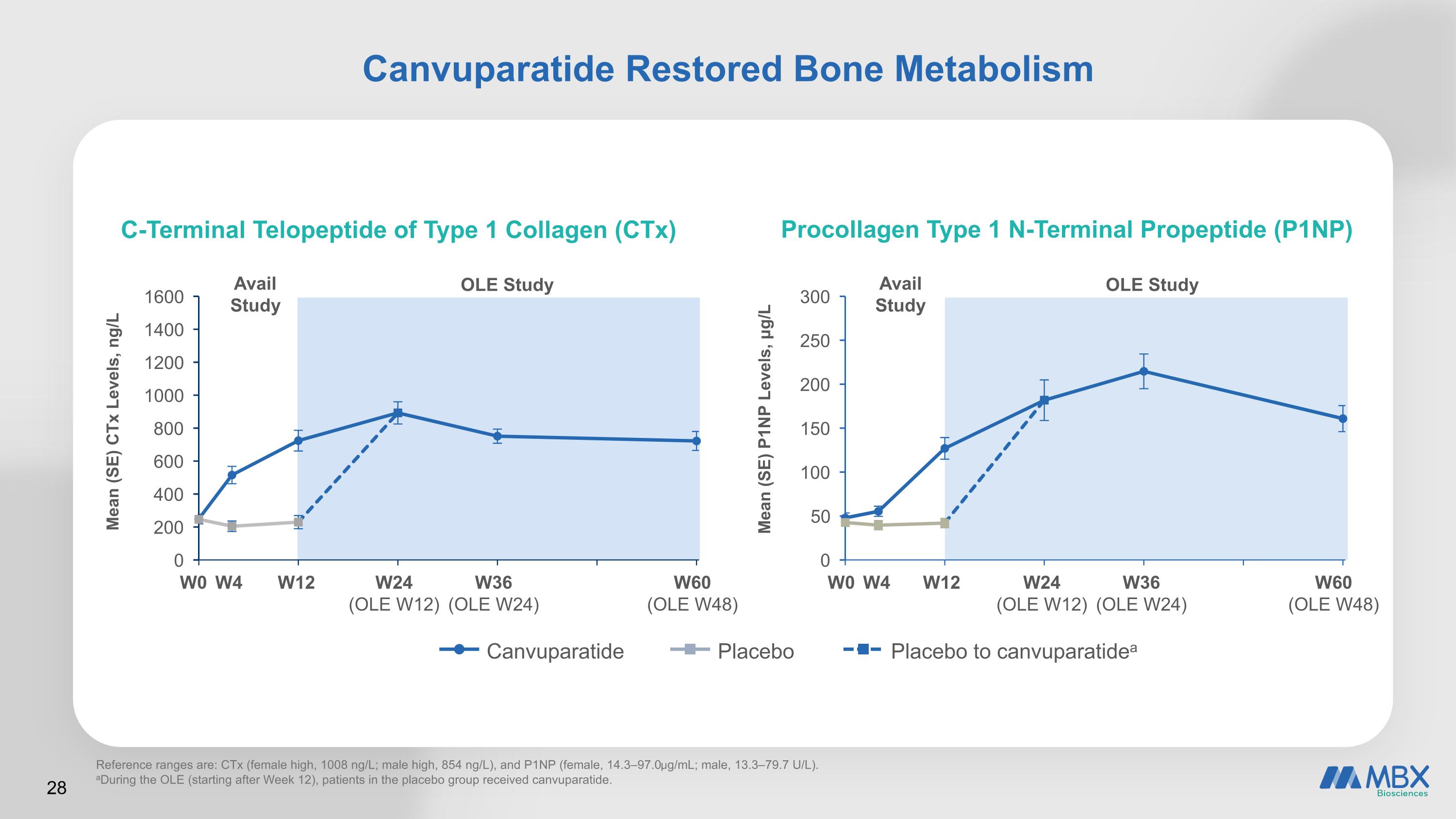
Canvuparatide Restored Bone Metabolism Reference ranges are: CTx (female high, 1008 ng/L; male high, 854 ng/L), and P1NP (female, 14.3–97.0 μg/mL; male, 13.3–79.7 U/L). aDuring the OLE (starting after Week 12), patients in the placebo group received canvuparatide. C-Terminal Telopeptide of Type 1 Collagen (CTx) Procollagen Type 1 N-Terminal Propeptide (P1NP) Canvuparatide Placebo Placebo to canvuparatidea Avail Study OLE Study W4 Mean (SE) P1NP Levels, μg/L W0 W12 W24 (OLE W12) W36 (OLE W24) Avail Study OLE Study W4 W60 (OLE W48) W0 W24 (OLE W12) W36 (OLE W24) W60 (OLE W48) W12
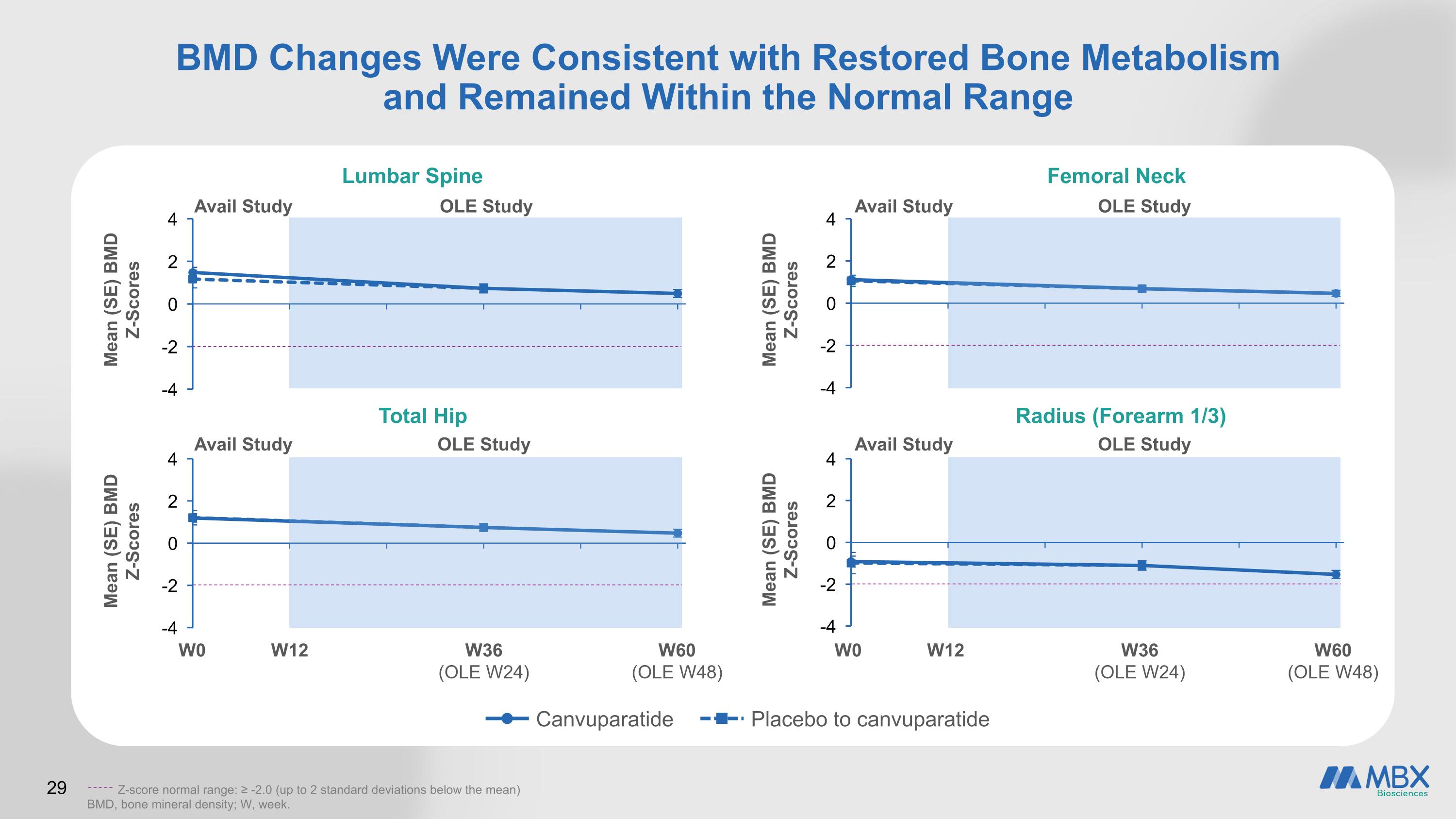
BMD Changes Were Consistent with Restored Bone Metabolism �and Remained Within the Normal Range Avail Study OLE Study Avail Study OLE Study Avail Study OLE Study Avail Study OLE Study W60 (OLE W48) W0 W12 W36 (OLE W24) W60 (OLE W48) W0 W12 W36 (OLE W24) Canvuparatide Placebo to canvuparatide Z-score normal range: ≥ -2.0 (up to 2 standard deviations below the mean) BMD, bone mineral density; W, week.
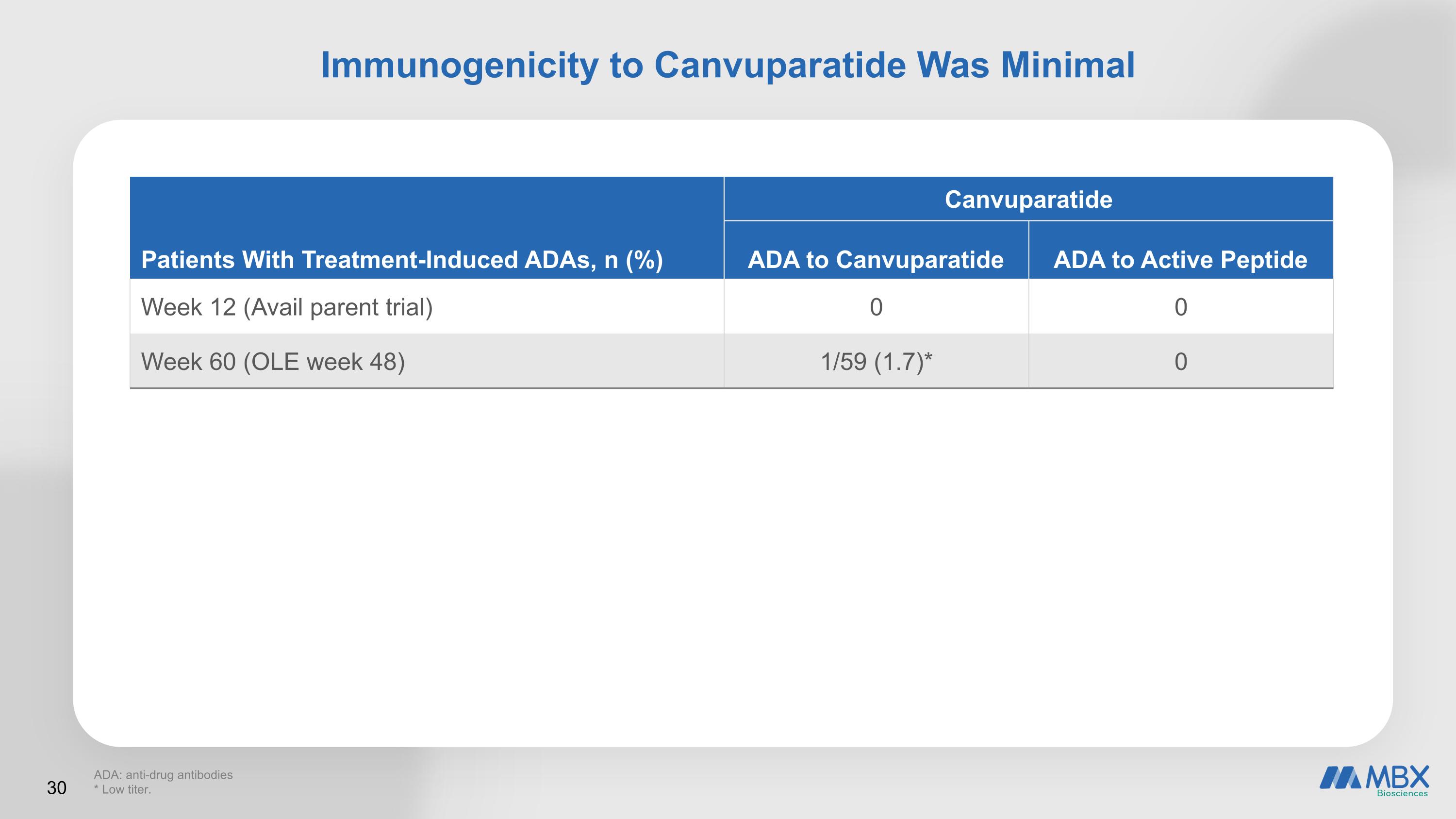
Immunogenicity to Canvuparatide Was Minimal ADA: anti-drug antibodies * Low titer. Patients With Treatment-Induced ADAs, n (%) Canvuparatide ADA to Canvuparatide ADA to Active Peptide Week 12 (Avail parent trial) 0 0 Week 60 (OLE week 48) 1/59 (1.7)* 0
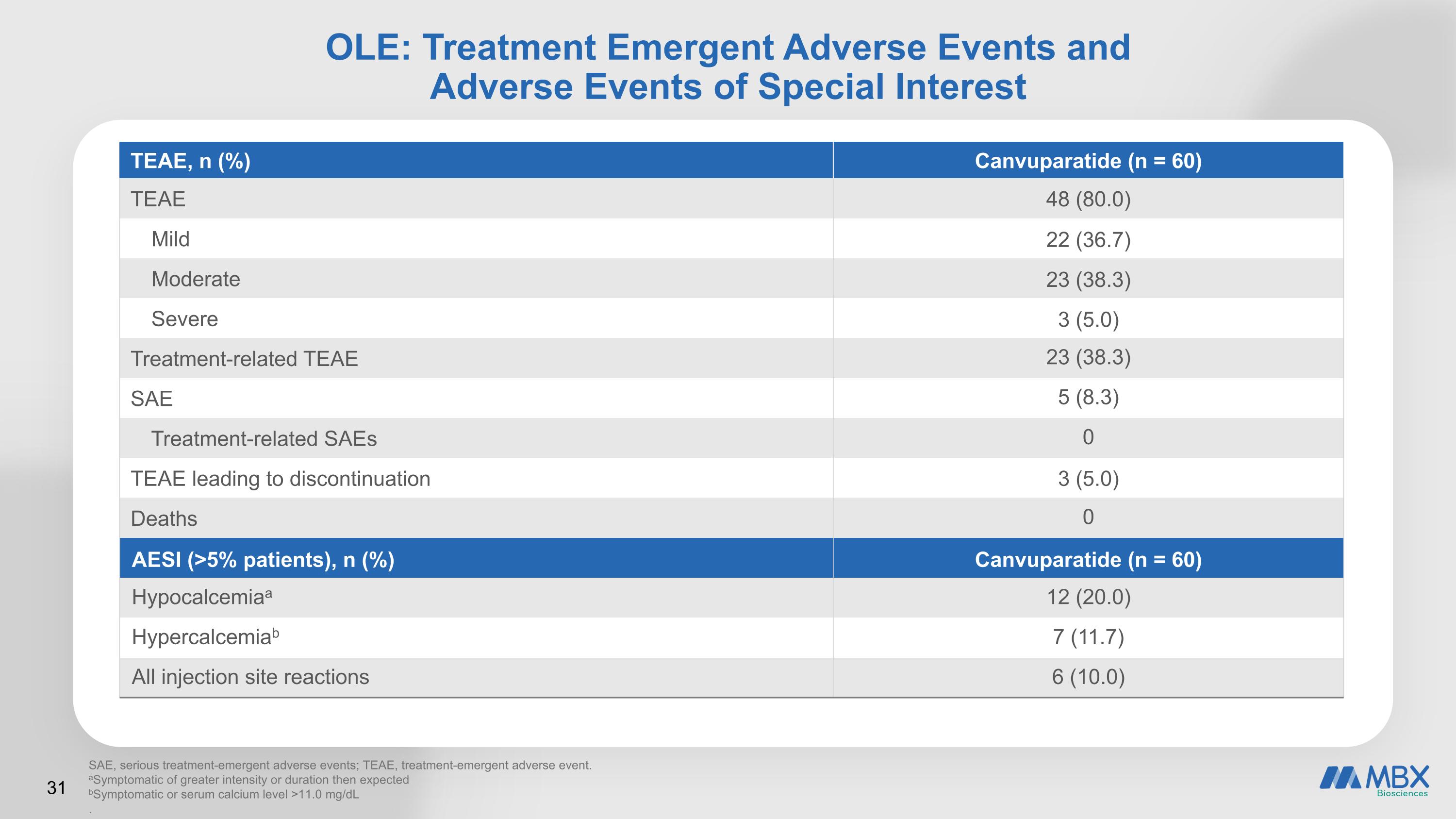
OLE: Treatment Emergent Adverse Events and�Adverse Events of Special Interest SAE, serious treatment-emergent adverse events; TEAE, treatment-emergent adverse event. aSymptomatic of greater intensity or duration then expected bSymptomatic or serum calcium level >11.0 mg/dL . TEAE, n (%) Canvuparatide (n = 60) TEAE 48 (80.0) Mild 22 (36.7) Moderate 23 (38.3) Severe 3 (5.0) Treatment-related TEAE 23 (38.3) SAE 5 (8.3) Treatment-related SAEs 0 TEAE leading to discontinuation 3 (5.0) Deaths 0 AESI (>5% patients), n (%) Canvuparatide (n = 60) Hypocalcemiaa 12 (20.0) Hypercalcemiab 7 (11.7) All injection site reactions 6 (10.0)
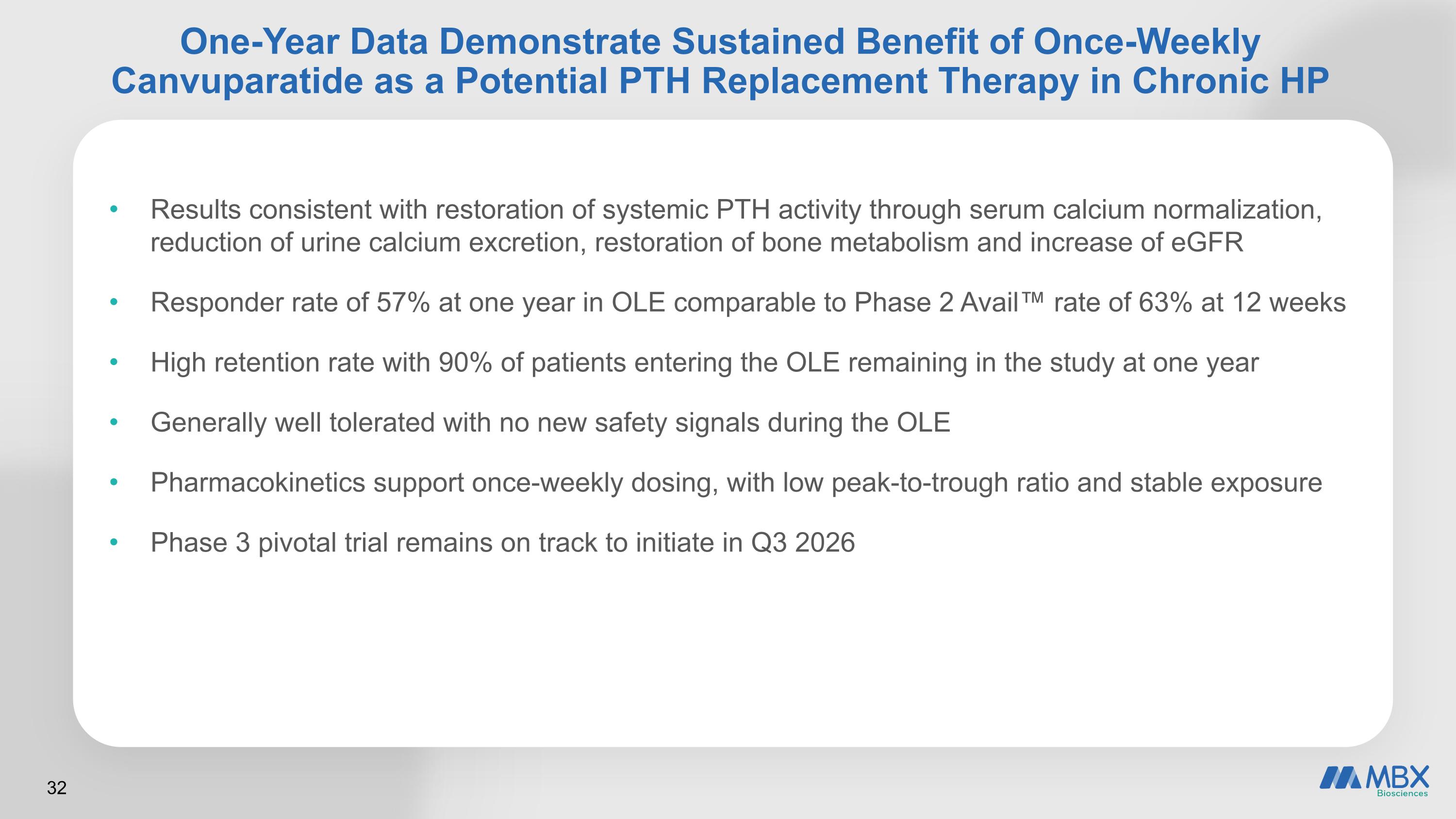
One-Year Data Demonstrate Sustained Benefit of Once-Weekly Canvuparatide as a Potential PTH Replacement Therapy in Chronic HP Results consistent with restoration of systemic PTH activity through serum calcium normalization, reduction of urine calcium excretion, restoration of bone metabolism and increase of eGFR Responder rate of 57% at one year in OLE comparable to Phase 2 Avail™ rate of 63% at 12 weeks High retention rate with 90% of patients entering the OLE remaining in the study at one year Generally well tolerated with no new safety signals during the OLE Pharmacokinetics support once-weekly dosing, with low peak-to-trough ratio and stable exposure Phase 3 pivotal trial remains on track to initiate in Q3 2026
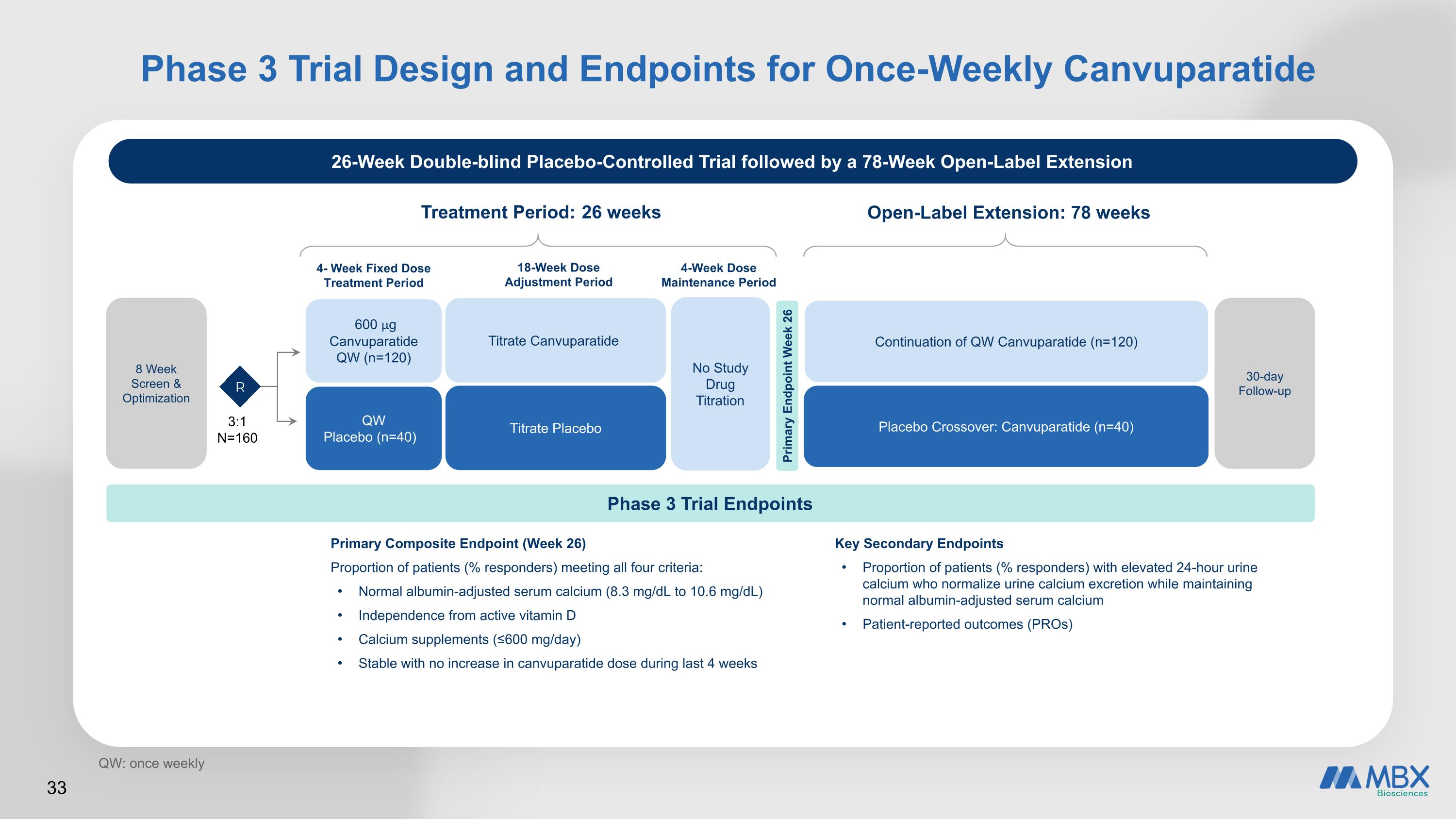
Phase 3 Trial Design and Endpoints for Once-Weekly Canvuparatide QW: once weekly Phase 3 Trial Endpoints Treatment Period: 26 weeks 4- Week Fixed Dose Treatment Period 18-Week Dose �Adjustment Period 3:1 N=160 600 μg Canvuparatide QW (n=120) QW Placebo (n=40) Titrate Canvuparatide Titrate Placebo Open-Label Extension: 78 weeks Placebo Crossover: Canvuparatide (n=40) Continuation of QW Canvuparatide (n=120) Primary Endpoint Week 26 Primary Composite Endpoint (Week 26) Proportion of patients (% responders) meeting all four criteria: Normal albumin-adjusted serum calcium (8.3 mg/dL to 10.6 mg/dL) Independence from active vitamin D Calcium supplements (≤600 mg/day) Stable with no increase in canvuparatide dose during last 4 weeks Key Secondary Endpoints Proportion of patients (% responders) with elevated 24-hour urine calcium who normalize urine calcium excretion while maintaining normal albumin-adjusted serum calcium Patient-reported outcomes (PROs) 26-Week Double-blind Placebo-Controlled Trial followed by a 78-Week Open-Label Extension 4-Week Dose �Maintenance Period No Study Drug Titration 8 Week Screen & Optimization 30-day Follow-up R
Conclusion Kent Hawryluk MBX President & CEO
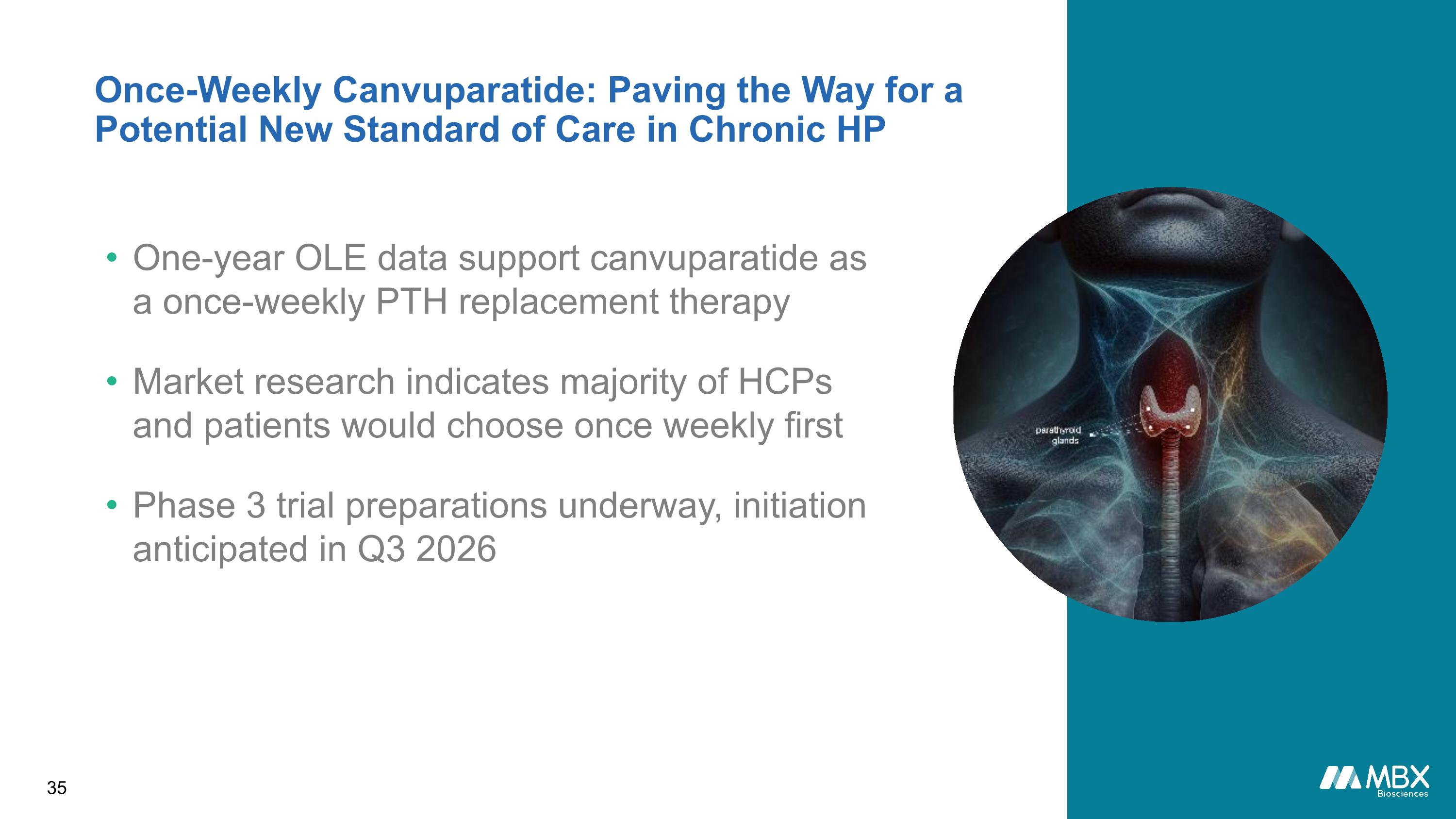
One-year OLE data support canvuparatide as a once-weekly PTH replacement therapy Market research indicates majority of HCPs and patients would choose once weekly first Phase 3 trial preparations underway, initiation anticipated in Q3 2026 Once-Weekly Canvuparatide: Paving the Way for a Potential New Standard of Care in Chronic HP
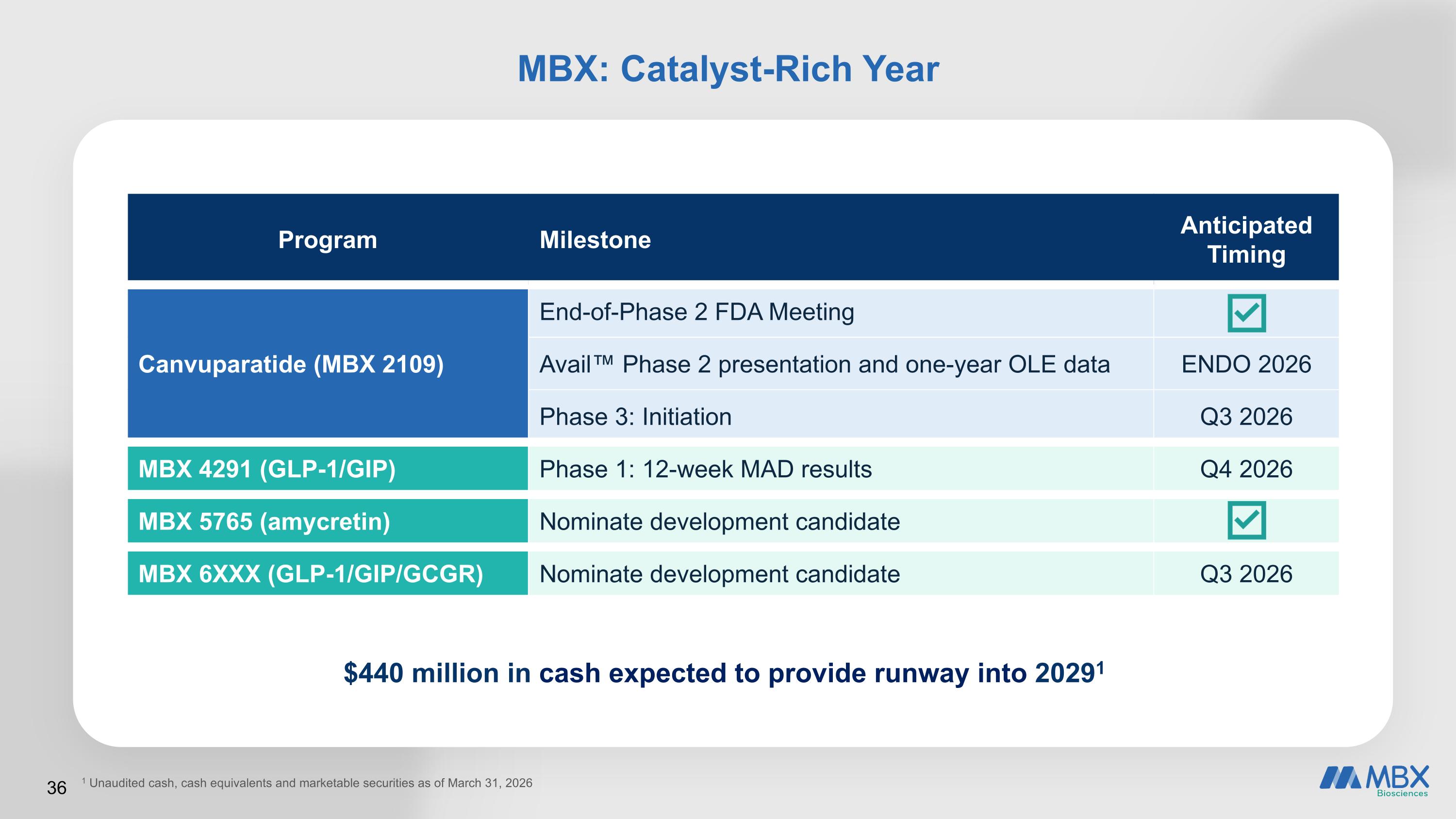
$440 million in cash expected to provide runway into 20291 Program Milestone Anticipated Timing Canvuparatide (MBX 2109) End-of-Phase 2 FDA Meeting Avail™ Phase 2 presentation and one-year OLE data ENDO 2026 Phase 3: Initiation Q3 2026 MBX 4291 (GLP-1/GIP) Phase 1: 12-week MAD results Q4 2026 MBX 5765 (amycretin) Nominate development candidate MBX 6XXX (GLP-1/GIP/GCGR) Nominate development candidate Q3 2026 1 Unaudited cash, cash equivalents and marketable securities as of March 31, 2026 MBX: Catalyst-Rich Year

Transforming the Lives of People Impacted by Endocrine and Metabolic Diseases through Precision Peptides Our Mission
